Sunday, August 03, 2008

Nighttime peace gathering at Hiroshima


Small crowd at unofficial nighttime commemoration, 6 Aug 2007

Here I am back in Hiroshima, year 2008. It is hard to believe that three years has passed since I last started this blog. Time does go by when one is busy. I stopped writing this blog because of work and personal commitments. Occasionally, I would receive an email from a stranger asking about when this blog would start again, or else I received some positive feedback from students, and this made me wonder if I should start blogging again.

So, yes, I will blog again and reactivate this after a long hiatus. I don`t think I will blog on a regular basis, as it is just too time consuming to write. I will, however, blog on an rare occasion. This is one of them, in order to fulfil a promise I made.


Me somewhere in Shanghai, 2006. I am aggressively pushing a Chinese tourist away from me to keep him from jumping into my picture. Happened to me a lot until I learned to assert myself.


You see, in 2006, I was just back from a trip to China. I was tired, and recuperating in Hiroshima. It is amazing how after the culture shock of China, being unable to speak in Chinese (although I did meet a lot of cool people, both Chinese and my fellow American travelers), Japan seemed safe and comfy. I was tired saying for the 100th time in Chinese that I did not speak Chinese or understand Chinese (wo bu dong hanyuu) until I realized that by saying this in Chinese I was contradicting myself and sending mixed messages to the Chinese people. Before I say anything else, I want to state for the record that the Chinese were gracious hosts, and I was impressed by their kindness and hospitality. China`s long term strength is its people and their energy and ambition, not just their sheer numbers.

Crowd at the Memorial for A-bomb victims laying wreaths at night (Aug 6, 2007)

Anyway, I so tired from my China trip that I missed the a-bomb commemoration on Aug 6. I also was too slow in getting up for the floating lantern festival, and so when I arrived at Peace park at 9:45 pm, the crowd had dissipated, and the lantern floating stopped.

Now I had heard rumors over the expat grapevine, that there was an unofficial “underground” gathering behind the baseball stadium across the A-bomb dome. Music would be played, and although some older Japanese felt this was inappropriate, this type of gathering spoke to the younger crowd and was a more meaningful memorial commemoration. Skeptical, I decided to walk on by on the way home. As I walked into the park behind the baseball stadium, I thought I heard some music playing.

“No. It can`t be true” I thought to myself. Intrigued, I kept walking into the darkness.
Yes, the rumors are true. There is a nighttime unofficial peace celebration on the night of Aug 6

And there it was – a small gathering of about 30 Japanese youth dancing in front of a DJ`s turntable. A few non-Japanese were in the mix and they were partying together. This was an enjoyable meeting: I met so many people, and we stayed up and chatted. I met Naoki, the head of “Sleepyeye” (3pi), a DJ group. To most Japanese, these would be disrespectful punks, having a party on a somber day like this. But to my American eyes, they were anything but disrespectful. Naoki was very friendly and courteous.

Naoki (L) of Sleepyeye ( 3pi). Very outgoing fellow who spoke fluent English!


Fashionable attendee who was very friendly and showed me her necklace


Another stylish attendee. I was amazed - no fights, and they were very friendly to a foreigner like me!

The other Japanese in attendance were equally courteous. Here are observations I had from talking to them:

1) The official memorial event does not resonate with the younger generation. I have been to many Hiroshima memorials and it is all the same – walk to the main ceremony, stand in the heat, and listen to official pronouncements. Then the tolling of bells, and then the doves are released, the child representatives of the city give a peace speech, and then the official peace song. Then people walk around the park. While there is nothing wrong with such activities, and somberness may even be necessary to show the gravity of the atomic bomb, how are you going to attract youth to future meetings? Why would one want to go to future A-bomb memorials if they are so kurai (dark, gloomy)?

Lots of dancing at this event. And no fights or illegal drugs!

2) Despite the underground nature of the event, there were a fair amount of non-Japanese attendees. Also, drinking in public is not a crime in Japan, so there was a lot of beer flowing around. But I did not see any fights or bad attitudes. They were just people dancing and chilling out and having a good time. This event is a good example of how Japanese youth, despite being criticized by their elders for being lazy or disrespectful, are very polite and mellow by American standards.

3) The police came and were not happy about the event, but I was amazed by their professionalism and knowledge of human nature. The police in the U.S. would have broken up the party and called in backup to do so. The Japanese police realize the need to persuade people and give them a face saving way out. They came to warn the group, and then when they came back again, they spoke firmly, but non-threateningly, then left. Give people a face-saving way out, and they will obey. Or will this only work in Japan.

4) The organizers took pains to make sure they left no trash behind. Yes, after the police came in to shut things down at around 1:00 pm or so, the attendees started picking up trash and making sure that the park was in better condition than before the event. Just amazing to my jaded eyes.

I was so impressed that I promised I`d put these pics on the web. And then I lost all my pictures! Yes, the pics are gone along with almost 1,000 other pictures I took in China. It must have happened during a botched data transfer drive I did visit again in the summer of 2007 and took more pics and promised I would put them up. And my work responsibilities took over (committees, grading, planning for the Japan field trip, etc), and putting up this blog post and pics was relegated to the “must do in the future” pile on my desk.

So no more procrastinating. Here are some of the pics. If you happen to be in the Hiroshima area on Aug 6, why not come to their “Summer of Love” behind the baseball stadium at night. Come well behaved, and socialize with Japanese. I think this is one of the ways to build world peace – for people of different backgrounds to socialize with each other. at night over a cold beer and good music. Why must peace activities be so somber? For an American, this may be very “sobering,” – to realize that young people just like the ones you are talking to at the party are among those who suffer and die whenever there is unnecessary war and conflict.


Hiroshima city, are you listening? There are other ways to reach out to Japan`s young people to help spread the message of peace.

Sunday, July 08, 2007

Going to Japan


Ayumi (L) and Koda Kumi (R). I downloaded the photo from english.chosun.com


Ah, sorry for the delay in posting. It has been one of the most hectic four months in my life. During this timespan, I, with the class I was teaching, helped run America`s second maid cafe at the kawaii-kon anime convention, and then I taught summer school classes at UH Manoa. Then, it`s getting ready for my field trip. Yes, I am taking 16 students to Tokyo, so they too can experience the Japan that I know. You know, the one of kitschy pop culture, like the a replica of the Statue of Liberty in front of the shopping center at Odaiba. Or, the joys of a workingman`s drama called taishu engeki (google it with my name *kakure gaijin* and you`ll see my description. Hopefully, I can get others excited about this Japan and spawn more Japanologists.


Anyway, here`s the pop culture tidbit for today. Wanna be a singer? Often, you can find more fame and fortune overseas than in your own backyard. This is a bit dated information, but please let me tell you about Ayumi Lee, a Korean who moved to Japan as a child. She was a member of the girl group Sugar, and last year, as a solo artist, released a cover of Cutie Honey, the theme to a Japanese anime made popular again by Koda Kumi, who did a cover of this song as well. This song became one of the most downloaded songs of the month.

Now the irony is that Korean society prides itself on being homogenous and there is an intense pride in being Korean. And on the other hand, there is a fascination with Koreans from outside Korea. It's as if these Koreans are quite exotic and yet Korean enough to be familiar. Daniel Henney is an example of this.


Let`s start off with the original anime version of Cutie Honey. This is a strange anime, one of the classics that I have never seen but my wife tells me about. This heroine seems to get naked a lot and this was PRIME TIME FAMILY FARE back in the 1970s!
http://www.youtube.com/watch?v=sY9-AltpAkI

A few years ago, Koda Kumi sang a cover of Cutie Honey and it made her famous.
http://www.youtube.com/watch?v=dffFT80CSTM

Now Ayumi Lee, who became popular as a member of the group Sugar, has struck out on her own solo career. It seems that she is playing on her Japanese upbringing to add some exoticism to her image. Koreans who I talk to say that she sings with a thick Japanese accent. Indeed, much criticism was levelled at her, as some thought this song sounded too Japanese, and the video seemed to Japanese influenced.

Ayumi singing Cutie Honey
http://www.youtube.com/watch?v=_l3wW-IWNmk

She`s a good example of how culture and artists can flow between borders. Technically, she's Korean, as she was born in Korea, and thus should have Korean citizenship. But she was raised in Japan, and I think this adds to her exotic appeal among Korean fans.

Tuesday, February 27, 2007

Spider-Man Japanese style!

The Japanese version of Spider-Man (1978)

Someone once told me that the Japanese are good at taking other people's ideas and making them better. Take for instance, cars. We in the U.S. found a way to mass produce them efficiently, making America the car capital of the world for a time. Then the Japanese come along, and learn to make them better and more efficiently. I would beg to differ. Rather, as other scholars have argued, Japanese take other people's ideas, and adapt them to their own culture. What comes out is a new product that bears a resemblance to, but is considerably different from the original. We can see the same thing in Spider-Man.


The American 1967 animated Spider-Man
First, let's look at the American version of Spider-Man I grew up with (I watched lots of reruns in the 1970s of this 1967 cartoon). The best thing about this cartoon was its catchy song. That's about it. Even as a kid, I knew this was trash animation - the producers, in order to save money, constantly reused the same scenes of Spider-Man swinging. And swinging. And swinging. I remember as a grade schooler, timing the swinging scenes in an episode where Spider-Man is being chased by a giant cat. About half the show consisted of him swinging.

BTW, click here for a link to the live action 1970s U.S. version of Spiderman. I love the 1970s theme music!


The Japanese 1978 live-action Spider-Man
Here's my rough translation of the lyrics
In the darkness between the buildings
Spider-Man!
Eyes burning with rage (lit: eyes shining brightly with anger)
Spider-Man!
He sacrifices his (inner) peace. (lit: He throws away his serenity.)

He sacrifices everything. (lit: He throws away everything.)
He pursues evil and soars across the sky.
Change to Leopardon!
Why do you... Why do you?
Keep on fighting and put your life at risk?
You live for just one thing. You live for just one thing.
Invincible man
Spider-Man
Now look at the 1978 Japanese version Spider-man (put up by VideoStar13), produced by Toei, the same folks who brought you other Japanese superhero shows such as Kikaider and Kamen Rider. As you can tell by the lyrics, it's a much more serious version of Spiderman. The producers did obtain the license from Marvel comics to show their version of Spider-Man to the Japanese. However, the producers had to make considerable changes to adapt this cartoon into the Japanese tokusatsu genre. For the uninitiated, tokusatsu (literally meaning "special filming" or "special effects"), is a live-action genre usually with superheros doing martial arts moves on agents of a villainous organization, and always crying out the name of their martial arts technique ("double chops!" "giant swing throw!") as they pummel their opponents. Think of the "Power rangers".

Yamashiro Takuya, Japan's version of Peter Parker

Someone else put up a fake subtitled version, which has nothing to do with the plot (click here if you want to take a peek, but the subs are purposely wrong). I can understand Japanese, but it takes a lot of energy and concentration for me to do a proper translation, so I took the lazy man's method and looked up the story at japanhero.com. The following plot synopsis is a combination of that article and my personal translation. First of all, Spider-Man's alter-ego, Peter Parker, was changed to a Japanese motocross champion, Yamashiro Takuya. This made sense since the other Toei tokusatsu shows usually featured a cool motorcycle-riding hero, and it would be very difficult to explain the presence of a nerdy white guy in Japan taking pictures for the Daily Bugle.

The Tetsujyujidan (Iron Cross), evil organization in this show. Hmmm...doesn't the guy on the right seem familiar?

To fit the tokusatsu genre, the villains had to undergo a change as well. No more individual villains like the Green Goblin or Dr. Octopus. Remember that Japan is a group-oriented society, and so even villains are organized into groups, this time as the "Iron Cross Organization" (Tetsujyujidan). Also this evil organization was headed by the 400-year old Professor Monster (Kaiju kyoju), played by Ando Mitsuo (who also played the flute-wielding Dr. Gill, head of the evil organization "The Dark," in the series Kikaider).

Spider-Man's ship called the "Marveller" (no joke!)

We all remember how Peter Parker got his spider powers right? (Bitten by a radioactive spider). And that he decided to fight crime when his Uncle Ben was killed by a robber. Well, this story got adapted to Japanese genres. The Marveller (named obviously after Marvel comics), a spaceship from another planet, crashed on Earth, being chased by the Iron Cross and Professor Monster. Takuya keeps hearing voices in his head telling him that "we are brothers." This was actually a telepathic signal being sent by Gariya, the last survivor of the Spider planet destroyed by the Iron Cross.

Aren't Japanese shows so violent? The Iron Cross kills Takuya's father

Takuya and his researcher and other family/research members father go out to investigate the crash site. There, the Iron Cross finds his father and kills him. Takuya grieves over his slain father, and then is chased by the Iron Cross bad guys into a cave, where he bumps into Gariya.

Being given spider powers is no pleasant experience

Gariya tellls Takuya his story and how he has been trying to contact him via telepathy. Gariya wants revenge for his planet, and tells Takuya that he must also avenge his own father (Just like in the 47 Ronin, revenge is a powerful factor in tokusatsu). And so he gives Takuya spider powers through a device that he clamps onto him. Note that in Japanese shows, the hero is usually created by someone, or gets their power from someone else. That's how skills are supposed to be transmitted in real life, from a master.

This is how "Spider sense" was depicted, as a radar

Out of the cave, Takuya discovers his powers. I like how they used live action stuntmen to climb up the walls of real buildings. Even his powers undergo some adaptation. The Spider Sense is more of a radar, where you can locate people. So Spider-Man figures out where the bad guys are (at a dam kidnapping a researcher to make evil monsters) and goes out to fight them. These are the bad guys for the first episode:

The Ninder, grey-clad henchmen to be used as target practice


Sexy villians such as Amazoness to turn Asiaphiles into Spider-Man fans!

The battle-scenes were also adapted to tokusatsu standards. Whenever Spider-Man shot his web, in true tokusatsu fashion, he had to announce his attack "Spider String!" And he used lots of martial arts moves and gymnastics to knock his opponents about. Lots of explosions thrown in for good measure. Note how Spider-Man actually moves like a spider, with his arms and legs flailing about. And also you can hear the 1970s enka (Japanese traditional music) horns in the background. Eventually, the villian Amazoness got tired and brought out a robot which morphed into a giant robot.


When the villain is getting his butt kicked, go into giant mode

Now here's where this show really gets hog wild. When the bad guys were on the losing end of the battle with Spider-Man, they would morph into a giant version of themselves. Spider-Man would then call in his giant Transformers-like robot to battle the giant villain. First he would jump into his Spidermachine GP7, then jet into an open bay in Marveller, which then transformed into the giant robot Leopardon.

Spider-Man jumps into his Spider Machine GP7 (How can you tell? It says so in English on the side of the car)

And flies into Marveller, which transforms into the sword-wielding Leopardon

Of course, Leopardon ends up smashing his enemy to pieces to save the planet for another day. This program helped to popularize the idea of giant robots fighting in these tokusatsu shows, and thus explains why shows like Power Ranger have giant robots fighting giant versions of the enemy. Plus, it also makes economic sense - the toy companies can sell giant robots and make more money.

Amazing rooftop stunts, even by today's standards!

Compare Spider-Man to how Saban had to adapt Kyoryuu sentai Jyu-ranger to America as the Mighty Morphin' Power Rangers: dumbing down the plot (the Power Rangers fight to save the high school dance, not save the world), toning down the violence, and just making this a show that only children could enjoy. No wonder Japanese products are so in demand - take other people's ideas, use quality control, and make them better. Just take a look at the detail in which they filmed the martial arts action scenes. Click here or the pic above to see an amazing clip from another episode to "marvel" at the stuntman's footwork jumping around the roof of a building and doing martial arts moves - wow!

What in Stan Lee's name is this "Thing"?

BTW, click here and here for clips (posted by bobx2x) of Japanese Spider-Man fighting a villain who suspiciously looks like ...well, the "Thing". And yes, the Japanese Spider-Man did have the American creator Stan Lee's seal of approval.

Sunday, February 18, 2007

Taekwon V: Korean version of Mazinger Z

Robot Taekwon V, Korean version of Go Nagai's Mazinger Z. Click on the picture above to see a youtube clip of the opening song posted by dodonga33


Mazinger Z . Click on the picture above to see a youtube clip of the opening song posed by dragonnar.

As I wrote in a previous post, the Japanese giant robot anime Mazinger Z, popular worldwide, was also a smash hit in South Korea. In fact, the main character in in the hit drama My Name is Kim Sam Soon (내 이름은 김삼순) even hums a few lines from the song in an episode. However, Mazinger Z came from the hated former colonial occupier, the Japanese, and so in 1976, Kim Cheong-gi directed South Korea's first home-grown animated robot, Robot Taekwon V. In this animation, we can see a lot of the complex South Korean love/hate attitude towards Japanese popular culture.

I found, on a Korean web site, this size comparison of Taekwon V (far left) with the Japanese anime robots Mazinger Z (2nd from left), Great Mazinger (2nd from right) and Grendizer (far right). C'mon, does size have to matter that much?

On the one hand, one wouldn't fault the Koreans for hating the Japanese, for during the 1930s, the Japanese government embarked upon a forced assimilation policy and attempted to eradicate Korean culture. Now colonists have often done this since the beginning of history: Americans attempted to destroy Native American and Native Hawaiian cultures under the guise of assimilation, and similar policies were seen by the British in Ireland and the Soviets in many of the lands they conquered. But while it puts these policies in perspective, it still doesn't excuse the Japanese colonial authorities.

During the 1920s, in response to mass uprisings in 1919 (known as the March 1st movement and put down by the Japanese authorities at the cost of several thousand Korean lives), the colonial government did give Koreans a few limited opportunities to express their own culture, such as in Korean-language newspapers or even radio broadcasts (as noted by Professor Michael Robinson). However, with Japan's military aggression into Asia in the 1930s, the Japanese decided upon a forced-assimilation policy making Koreans to pray at Shinto shrines, change their names to Japanese names, and during the war, millions labored in Japanese factories as conscripts or forced labor. Many unlucky women ended up as "comfort women," forced prostitutes for Japanese soldiers. Koreans were forbidden from using their native language in schools or in government documents. In fact, I met many elderly Koreans during my trip there who could speak Japanese fluently, no doubt having learned this language in school.

Taekwon V statue in South Korea

After the war ended in 1945, Korea gained its independence, but the scars remained. So strong was anti-Japanese feeling that Japanese-language television and radio broadcasts, publications, and pop music, were all prohibited, with the ban only being gradually lifted in 1998. However, despite this ban, Japanese popular culture did manage to make its way into Korea. Often, Japanese cartoons were dubbed into Korean, stripped of all Japanese references, and then broadcast in Korea, often without telling the audience of the true Japanese origin. Or else, as Jasper Sharp points out in an interesting article, it was common practice among the Korean film industry to use Japanese film scripts. Of course this made economic sense - if Japanese culture is banned and so your audience has no idea you are ripping off a Japanese film, then why not cut corners and use ready-made scripts from Japan?

Note the similarities and differences between Taekwon V (L) and Mazinger Z (R)

Anyway, back to Mazinger Z. This cartoon was broadcast in Korea and became a huge hit. In fact, as the Chosun Ilbo points out, "Mazinger Z was so popular here as to be treated as an honorary Korean." But alas, this was a Japanese cartoon, and what Korea needed was a giant Korean Robot for kids to look up to. So, much as how Hyundai cars first used an engine developed by the Mitsubishi Corporation of Japan, out came a Korean giant robot that looked suspiciously like it was based on Mazinger Z: Taekwon V! But there are differences, however subtle. The head was replaced with a helmet similar to that worn by Admiral Yi, who fought of Hideyoshi's 16th century invasions, and to make sure viewers understood this was a Korean-made cartoon, Taekwon V fought with Taekwondo! Other than that, Taekwon V looks a bit like a reverse-engineered Mazinger Z. Click here for a video of Taekwon V.

Poster for the 1976 film, "Robot Taekwon V"

The movie version of Taekwon V has just been restored and re-released. Now Japanese nationalists may call this a Korean ripoff of Mazinger, and Korean nationalists may try to deny the Mazinger-inspired origins of Taekwon V, but there may be a better way to interpret this anime: cultures have always borrowed from each other. Historically, the Japanese have historically borrowed kanji, Buddhism, and architecture from their Korean neighbors. And if we look at Korean manhwa comics today, they bear a striking similarity to Japanese manga. So culture travels back and forth in all directions. My hope is that rather than argue who imitated who, young Koreans and young Japanese can learn they share much in common, and that popular culture can help bring those two nations closer together. (BTW, the Japanese First Lady is a huge fan of the Korean drama Winter Sonata). Imagine - both Koreans and Japanese grew up watching giant robots! Maybe we should ask for a Japanese-Korean joint production, such as "Taekwon V and Mazinger Z versus Dr. Hell"

BTW, I found some open source movies of Mazinger Z in dubbed into Arabic. You can figure out what is happening even if you don't understand the language. In this episode, Kabuto Koji, under the guidance of Miss Yumi Sayaka (pilot of Aphrodite A), is clumsily learning how to control Mazinger Z.

UPDATE: Just found this video on youtube. It seems to be a Korean video of someone playing the Mazinger Z theme song on the piano. Wow! And what about this video of an Italian singing show with the theme to "Great Mazinger"?

Wednesday, January 31, 2007

Catchy songs by offbeat Japanese girl groups


Ever hear a song that you find so damn irritating, but the more you listen to it, the more it worms its way into your brain? Pretty soon, you catch yourself humming along to the song and wonder what has happened to you.

Well, Chatmonchy's "Shangri-la" (Shan-gu-ri-ra) is one of those songs. I first heard it after renting Countdown TV (a weekly TV show that counts down the top 50 hits in Japan) from the local Japanese video store. Anyway, Chatmonchy (チャットモンチー)is a all-girl trio from Tokushima prefecture Japan, on the island of Shikoku. Their members are Kumiko on the drums, Eriko on the guitar and vocals, and Akiko on their bass. The first time I heard them do a live performance song on Countdown TV, I thought the Eriko's voice sounded like a poor imitation of the quirky Japanese singer YUKI. And we've already seen this genre of off-beat quasi-amateurish girl trios, like the group Shonen Knife. I grumbled, "Oh no, not ANOTHER one of THOSE Japanese girl groups," and I fast forwarded the DVD to skip their performance (click here or the clip above to see their video posted by Tofumon).

And then it happened. I was chopping vegetables in the kitchen and caught myself humming the chorus: "Shan-gu-ri-ra shiawase datte..." I was doing medicine ball push-ups in the gym and found the beat in my head "Shan-gu-ri-ra..." Then I was trying to write a lecture for a class and heard the walls sing to me: "Shan-gu-ri-ra. "The song would not go away, so I popped in the DVD and listened to their live performance again. "Shan-gu-ri-ra..."


Halcali's Strawberry Chips - a surprisingly catchy song!

So I admit defeat. Chatmonchy has gotten into my head and now I await their American debut. Now they've joined other irritatingly catchy tunes by quasi-amateurish girl groups that have wormed their way into my head such as Halcali's Strawberry Chips (subtitled and posted by Novaforever) or Kigurumi's Tarako Tarako Tarako (posted by Prekorata).


Kigurumi (dressed as Tarakos) singing Tarako, Tarako, Tarako

NOTE: Tarako Tarako Tarako is from a commercial for Kewpie brand tarako (salted Alaska Pollock roe) spaghetti sauce. This must one of the oddest commercials I have seen, even by Japanees standards (click here to see a commercial posted by ebisen). Yes, the Japanese like to mix cream and tarako to make pasta topping- believe it or not, it's quite delicious!


Wednesday, January 24, 2007

The transformations of Mazinger Z (マジンガーZ)

Mazinger Z, influential Japanese anime

Did you know that 60% of the world's animated series were produced in Japan in 2004? (Source: Time Asia). Indeed, people around the world have probably grown up watching the same made-in-Japan animated shows. Even last year, I remember watching a Chinese dub of Inuyasha in my hotel room in Xian. Now many animation studios are being outsourced to South Korea, where labor is cheaper (did you know that the Simpsons are drawn in a Korean studio?) but still there is no denying the power of Japanese animation.


Let's look at how Mazinger Z (pronounced with the British "zed" not the American "zee") a classic Japanese anime underwent global transformations. This anime, which ran from 1972-4, was the first of its kind: a giant robot piloted by a human. Kabuto Koji would jump into a hovercraft and dock into Mazinger Z's head (click here to see a poorly translated video of the first episode). BTW, his robot comrade is Aphrodite A, who would eventually be modified to shoot missiles out of her breasts. I remember as a kid, watching dubbed versions of Mazinger Z in a movie theater in Hawaii. Frankly, the only scene I remember is when Mazinger fell into the water and Kabuto could not see out the glass since there were no windshield wipers. Click here or on the Mazinger pic above to see the opening song for Mazinger Z. It's a cool sounding song that just sticks in your head.


Look at the size of the Mazinger statue in Spain!

Mazinger Z also became very popular outside of Japan:
  • Check out the Italian version known as "Mazinga Z"- the singer is so much more emotional, it's almost a different song.
  • As for the French version, well, it sounds like 1980s Eurodisco music, with the singer going "Mazinger! Mazinger!" But hey, haven't the French have been keeping disco alive long after it died out in America?
  • Also, look the Arabic version, known as مازنجر (Majinger) which starts out sounding like any average cover of the song, and then midway through, changes course and just rocks (video is from Dr. WaSaBe, who also did the translation). I love the ways the singer sounds when he cries, "The time has arrived! Morning has started! GET READY TO START SHOOTING!"
  • Unfortunately, the U.S. version, released in the 1980s as Tranzor Z, got rid of any semblance of an opening song. Talk about the American characteristic of making cuts in quality to cut down on costs. Makes sense, as this series was heavily edited in order to make it suitable for children? Think of all the 1970s and 1980s cartoons in America - any of them had a catchy theme song like Mazinger Z? Sigh, what we were deprived of during childhood...
  • And Mazinger was extremely popular in South Korea, where it was known as 마징가 제트 and led to the creation of a Korean anime, but that is the subject of another post...

Monday, January 22, 2007

Super Girl - China's version of American Idol

Zhang Liang Ying, contestant on Super Girl

Sorry for the long delay in posting. So much work to do, and I have stumbled across so many interesting Asian pop videos. So where do I start?

When I was in China in the summer of 2006, I learned about a show called "Super Girl," (超级女声) officially known as Mengniu Yogurt Super Girl Contest (Megniu is the dairy company that sponsors it). It's the Chinese version of American Idol, which, as I have previously pointed out, is a copy (or franchise) of the British Pop Idol. Anyway, Super Girl caused a sensation because viewers get to vote, via text message, for the winner. Imagine, voting in China! Trust the masses to choose for themselves!

This show was watched by the largest audience in Chinese TV history, by millions (or should I say hundreds of millions?) of viewers. In fact, 400 million watched the finals in 2005, a number, as the Seattle Times (which I read via the China Daily) put it, was more than the combined populations of the United States and Britain!

When I was in Xian last summer, I searched for a pub that broadcast this show, so I could sip beer while watching it. I didn't find any, although I did bump into some cool Chinese college students (one spoke with a PERFECT American accent and knew all the New York punk bands even though he had never left China). In the end, I ended up channel surfing in my hotel room and came across clips of Super Girl on late night TV. I remember, in my drunken haze, a woman doing an horrible rendition of "I believe I can fly" and I was hooked, especially since some of the contestants were quite good-looking.

Hu Ling, 5th place finisher in the Changsha district

So I did some internet research, using wikipedia and youtube when I arrived back in the USA. Now the contestants range from comical (hey, they have their version of William Hung), to the sexy (Hu Ling in another outfit), to the simply amazing. You've got to check out Zhang Liang Ying , 3rd place contestant in 2005. Click on the picture at the top of this webpage or here for a clip of her singing a Chinese folk song...

Ok, so it wasn't a Chinese folk song. But wasn't it amazing how her voice sounded exactly like Mariah Carey's? It's as if all she did was listen to Mariah Carey albums at home. I think she's got the pipes, looks, and charisma to make it in the U.S. (at least among Chinese Americans like me) if given the proper material. Also makes you realize that people around the world often listen to the same songs.

But as in real life, the best do not necessarily win. Just listen to the Super Girl winners. In 2005, Li Yuchun took the top prize. Click here or the picture below for a youtube clip of her singing a stirring rendition of a "Chinese folk song."

Li Yuchun, 2005 winner


In 2006, Shao Wenjie 尚雯婕 took first place. Hmmm...note the resemblance? (Actually, she seems to sing quite well.)
Shao Wenjie, 2006 winner

In case you haven't noticed, both winners look like young boys. Kind of the androgynous look of how Japanese boy singers look like young girls. Click here to see a commercial featuring Japan's hottest boy band, KAT-TUN. (For all you KAT-TUN fans out there, please do not flame me. I'm going be scolded by my wife for mocking them. That should be sufficient punishment). What's with the fascination with androgyny in East Asia?

To me (and the 100+ international students, including Chinese, that I informally surveyed), Zhang (the Mariah soundalike) should have won hands down (sorry if I offended Li fans). Seems like voters don't necessarily look for talent. In fact, Super Girl makes you think about how we elect our politicians in America...

Tuesday, November 07, 2006

Borat eats kimchee?


I finally saw my first movie in months: Borat!: Cultural Learnings of America for Make Benefit Glorious Nation of Kazahkstan. Here's a scene from the first four minutes of Borat. I felt such a guilty pleasure. On the one hand, I could see Kazaks cringing in shame at their portrayal of their country, much like the scene in Dragon: the Bruce Lee Story. You know, the scene when a young Bruce Lee felt shame while the audience was roaring with laughter at Mickey Rooney's portrayal of an Asian in Breakfast at Tiffany's. On the other hand, I also laughed so hard that I felt like, to paraphrase Borat, stomach was going to drop out of anus. Sasha Baron Cohen, who plays Borat is either offensive, a genius, or an offensive genius.


But I did come in touch with Kazaks during my trip to China when I ate Kazak food in a yurt in Xinjiang province, and especially noticed the sheep head prepared for the guest of honor. So I felt it somewhat a responsibility to find more positive images of the Kazak people.

Did you know that Kazakstan also has Superstar KZ, its version of American Idol (which in turn is a version of Britain's Pop Idol)? Indeed, in this video, the Kazak singing sensation, Contestant NO.320106 Алтынай Сапарғалиева (Altynay Sapargalieva), belts out a Kazakstan rendition of Christina Aguilera's _The Voice Within_. She is also "21st century leader" (A Kazak version of Jeopardy) contestant, and 9th grader.

And when I browsed Wikipedia about Superstar KZ, I noticed that the second place winner was a chap by the name of Роман Ким (Roman Kim). Yes, this is a reminder that there are 100,000 Koreans living in Kazakstan (which has a population of 15,300,000). The existence of these Koryo Saram (Корё сарам - Koreans in the former USSR) is a reminder of a sad chapter in history. While much attention has been made of the internment of Japanese in America, the Koreans in Russia also had it bad. During the late 19th century, the Tsars encouraged Koreans to settle in Siberia to help solve a labor shortage, and a few even ended up in Kazakhstan. But in 1937, Stalin, being a paranoid ruler (what's up with these paranoid Communist rulers such as Mao, Stalin, or Pol Pot?) distrusted the Koreans in the Soviet Union and thought they were Japanese spies. Never mind that the Japanese had forcibly colonized the Koreans and that many Koreans had fled to Manchuria to wage up a guerilla war. But since Stalin distrusted them, all Koreans in Russia were sent to Kazakhstan (a fate suffered by other minorities such as Poles, Chechens, and Jews). But many of these Koreans managed to overcome the hardships of forced relocation, and have now carved out a presence in Kazakhstan.


The thing that struck me was how Asian the people of Kazakhstan looked, as in this video by the Allstars titled, "Qazaqstanym". But no duh..like, isn't Kazakhstan in central Asia?


So I have a strange feeling that Borat may be more familiar with Korean food that we might think. On this note, I'll leave you with a "Suiyu degen osy ma," a R&B/Hip-Hop music video by Bangor, a now-defunct Kazak group.

Wednesday, November 01, 2006

What is a kiss? Kissing pranks on TV.


I thought the Japanese were the world's most sadistic pranksters...well, this video proves me wrong... I would be truly disturbed if I were the women in the video...

And now, back to Japan...


Now for a Japanese version, look at the following clip, where a chimpanzee kisses Koike Eiko (swimsuit model, and former announcer for Pride Fighting Championship). For those in the know, the chimpanzee throws in a good imitation of Hard Gay at the end of the video.

Count your blessings you are NOT a Japanese comedian


But the women have it easy. At least they don't have to kiss smelly butts like in this video. This is part of a sadistic TV game show (done by paid professional comedians, don't try this at home) where every time the comedian gives a wrong answer, a human butt comes just a bit closer to his face.

Last, if you just want to see a plain, unadulterated video of a Japanese KISS, well look at this video of a Japanese commercial. Yeah, "I was made for lovin' you baby, you were made for lovin me!"

Saturday, October 21, 2006

MC Hotdog: "I love Taiwan chicks"

Taiwan's MC Hotdog has stumbled upon a surefire method of meeting sexy Asian women: make a catchy song praising the beauty of local women. In this case, with Zhang Zhen Yue singing the main tune, he praises Taiwanese women in "Wo Ai Tai Mei" (我愛台妹), translated as "I love Taiwanese chicks." It doesn't take a rocket scientist to figure out that national identity is sexy and sells, especially in a catchy song sprinkled with Taiwanese dialect. (Click on the picture above or click here to go to a clip of the song put up by Malubud)

From what I've learned on the Internet, according to Mei Huang's article "The Ubiquity of Tai ke," in Taiwan, "Tai ke" is the equvalent of the U.S. redneck, something like a deragotory term now used as a marker of local Taiwanese pride. The "Tai ke" is supposed to dress all gaudy and loud (gee, fits in with rap style!) and the "Tai mei" is the female equivalent. So MC Hotdog is rapping an ode to the "Tai mei" in this video. And just for your info, MC Hotdog has the character for "dog" 犬 on his jersey.
Now the People's Republic of China views Taiwan as a breakaway province, and has made national reunification a top priority. But this policy clashes with the emergence of a distinct Taiwanese identity. The Japanese took over Taiwan in 1895 and ruled it for half a century, first using brute force to put down any resistance, then developing the infrastructure and creating a policy of assimilating the Taiwanese. In fact, Japanese became the common language of the schools in the colonial period and so many very elderly Taiwanese can speak fluent Japanese. By the time the Japanese were kicked off the island in 1945, Taiwan was the most developed province in China.

Many Taiwanese (descendants of people in Taiwan before the end of Japanese rule), although they suffered discrimination from the Japanese, suffered even more discrimination at the hands of mainlander Chinese who took over the island in 1945. In 1947 Taiwanese rose up in an uprising known as the February 28 incident in which thousands died in the resulting government crackdown. And in 1949, millions of mainlanders fled to the Taiwan following the Communist takeover of China, beginning a process of mainlander domination of Taiwan politics which really only ended with the rise to power in 1988 of President Lee Teng-hui, a native Taiwanese.

Given this history, today many Taiwanese speak their native dialect with pride. Take a rap (which seems to be based on the Spinner's "I'll be around" posted by shockg) , sprinkle it with Taiwanese dialect, and combine it with the fact that Chinese women overshadow Taiwanese women in the worldwide Chinese media. Now you understand why MC Hotdog is so popular among Taiwanese women, as seen in this video of a live club performance (click on the picture below or here to see the video posted by bj23tube). As you can see, all these Taiwanese women are hugging him and energetically singing along with his song!

So my friend, want to meet Asian women? Become a rapper and throw in a healthy dose of nationalism and identity politics and this is what you get! Now you know why he sings, "Wo ai tai mei! Tai mei ai wo!" (I love Taiwan chicks! Taiwan chicks love me!)

Tuesday, October 10, 2006

Journey to the West

Journey to the West must be one of the most famous novels that we don't know about. It's an epic Chinese novel (written in the 1590s) well known in East Asia, and I've seen pictures of the main character the Monkey King in both China and Japan.

Little known to most Americans is that they know of the main character. The Monkey King's name is "Sun Wukong" and the Japanese pronunciation is "Son Goku". Yes, you anime otaku, the character from Dragon Ball! In fact, Dragon Ball is loosely based on Journey to the West.


Click here for a Chinese remake of Journey to the West posted by chunwui5021. Those of you who read the book can figure out this is from the beginning, when the powerful Monkey King takes on Buddha himself. The bet is whether Sun Wukong can jump out of the palm of Buddha's hand.


Here's the karaoke clip of the theme song posted by kd6cute3.

Wednesday, October 04, 2006

Sadistic Japanese TV toilet humor

Ah, how I long for the good old days of Japanese TV when producers did not give a whit about torturing their victims...I mean contestants. Now Japanese TV is mostly about in-jokes about local celebrities or game shows with celebrities. Here's a scene from a Japanese TV show - literally toilet humor. Please note how what passes for mainstream TV in Japan gets flagged as adults only in America!

Friday, September 29, 2006

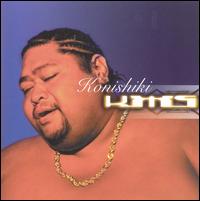
Konishiki and Layzie Bone - "Livin like Kings"


For the uninitiated, Konishiki, formerly Saleva'a Atisano'e, is a Hawaii-born Samoan sumo wrestler, who became the first foreigner to reach the rank of Ozeki, or champion, the second highest rank in sumo. Surprisingly quick and powerful for his nearly 600 lb body, he could, during his prime, easily force out almost any Japanese sumo wrestler from the ring. As the years passed by, injuries took its toll, and Konishiki had to retire from the world of Sumo. So what's an ex-sumo wrestler to do?


Click on the picture of Layzie Bone above, or the picture of Konishiki's album to see a video of Konishiki, the 500+ lb Sumo wrestler-turned-rapper (posted by MusicVideos808). Layzie Bone of the rap group Bone Thugs-N-Harmony makes a special guest appearance. I love this video - Konishiki must be literally the biggest rapper on this planet, and the song does grow on you after awhile.

This song, "Livin' like Kings" from the album Konishiki, KMS was released in the year 2000, after his retirement from sumo wrestling, but I don't recall it doing very well in the U.S. As of now, Konishiki now goes about Japan singing Hawaiian songs and making good money through his television appearances. Here's a link to a clip of his song Sumo Gangsta, in which he raps in Japanese!

How did the critics receive this album? Jon Azpiri of the All Music Guide sums it up:

Konishiki, KMS is definitely what you would call niche marketing. The album is targeted at those underrepresented fans of both sumo wrestling and hip-hop. Not exactly a growing demographic, but nobody's going to stop Konishiki from trying. When you're a 6'3", 600-pound champion sumo wrestler, odds are you can make rap albums or do anything else you want to and no one will stop you. No doubt Konishiki's considerable girth, not to mention his fame, earned him a record deal. What's scary is that this relative novice provides some passable West Coast hip-hop....Konishiki really shouldn't be making albums. Of course, nobody wants to be the one to tell him.

Regardless of what the critics say, you gotta love this guy as he is still active after retirement from sumo and now promotes Hawaii - Japan ties. He plows much of his money into helping disadvantaged children in Hawaii go to Japan, through his Konishiki Kids foundation. And he even did the second ending theme for the animation Kirby (based on the video game). Check out this video posted by IvynaJS!

Wednesday, September 20, 2006

Japanese potty training anime

"If you can use the toilet, you've become a 'pantsman'!"

The above quote starts off this Japanese potty training video posted by Deebingo. It teaches kids that when they can use a toilet, they can become a "pantsman." Think of it as the equivalent of getting your blue belt in karate class. And I just love the smiling turds near the end of the video!

Here's the first dialogue:
Kid tiger:"My stomach's going muzu muzu (feels itchy)."
Tiger Mom: "And when your stomach goes muzu muzu, what does it mean?"
Kid tiger: "I gotta pee pee! Toilet!"


Song:
"When you shi shi, it goes "shi pa pa"

Second dialogue:
Kid tiger" "My butt's going muzu muzu"
Tiger Dad: "And when it goes muzu muzu, what does it mean?"
Kid tiger: "Doo doo! I gotta toilet!"

Talking toilet: "Okay, let's try making doo doo"

Song:
"When you unchi (Japanese for "doo doo"), it goes "un pa pa""

Tiger dad: "Wipe your butt"
(smiling turds go down toilet)
Kid Tiger: "Bye bye doo doo!"

Kid Tiger: Daddy, I did a doo doo.
Tiger Dad: You did a good job. So from today, you can wear underwear! (Instead of diapers).


Enjoy the live action afterwards!

Monday, September 04, 2006

More Korea --> Japan meme rap!


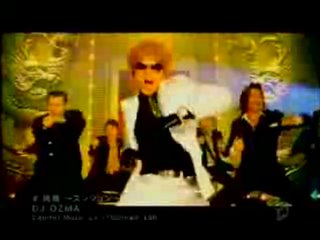
DJ Ozma is at it again. Scene from "Junjou," his cover of Koyote's "Sunjon"

I am still dreading the prospect of choosing from the 1,000 pictures or so I took in China (the other thousand were destroyed by a botched CD transfer in China). I spent the past few hours going over the final proofs of my book - it's way past the deadline, and already been advertised online. Right now, I don`t know how to start working on my China blog.

Shin Ji from the Korean group Koyote

So to procrastinate, I`d like to introduce you to a super-catchy song that has wormed its way into my brain this summer. DJ Ozma was at it again, once again doing a cover of a Korean pop song. This time, it`s from the hip-hop and dance group Koyote.

1) Koyote version
First take a look at the original song, "Sunjong" (written as 純情 in Chinese characters, 순정 in the Korean Hangul writing system) which came out in 1998. I was dancing on a tabletop in a restaurant to this song in Beijing of all places! (amazing what Chinese whisky and a little coaxing from sexy belly dancers will do to you):

Click here or on the picture above to see and hear Koyote.

2) DJ Ozma version
Now look at DJ Ozma`s cover of this song, which they use the Japanse reading of "Junjou" (純情 in Chinese characters, スンジョンin Japanese katakana writing). Same Chinese characters as in Korean, but different pronunciation . Note how he plays the disco kistchy aspect in his video. I love how he reinforced the "It`s disco time baby!" by appearing in disco clothing.

Click here or on the picture of DJ Ozma above to see and hear the video..

Now that`s what I consider pan-Asian music. Korean beats with a little bit of Japanese tongue in cheek humor added on.

3) Spread of the meme

Crowd at a baseball stadium chanting the tune from Junjou/Sunjong

And like a virus, the chant "wo-oh-oh...wo-oh-oh" started spreading throughout Japan! For example, check out this clip from a baseball game between the Yomiuri Giants (the Yankees of Japan) and the Chiba Lotte Marines (last year's Japan Series champion). Listen to the crowd chant in the back, and then notice how they start waving their white towels like in the DJ Ozma video. Click here or on the picture of the baseball stadium above to see this video. Of course, all this makes sense since the Lotte company is a Korean-Japanese conglomerate founded by Shin Kyuk-Ho a.k.a. Shigemitsu Takeo, a South Korean national who also lives in Japan half the year.

4) Need your help
What song is Sunjong originally based on? The background sounds quite familiar. Donna Summer's "I Feel Love" perhaps? Arpeggio's 1976 hit, "Love and Desire"? Any ideas?