Monday, May 29, 2006

Pop music meme through DJ Doc and DJ Ozma


I love youtube! It's a great way for me to stay current on the music scene, and I can easily access music videos and compare them side by side. In fact, it's a great tool to keep up with popular culture in Japan.

American and European pop culture has become a sort of worldwide common culture among the young urban educated people in places like South Korea, Taiwan, and Japan. Young adults in these places listen to Eurobeat or hip-hop music, dress like gangstas, watch American movies, and learn years of English in middle and high school.

You can easily see how a meme (cultural idea transmitted from one mind to another) transforms, as a song is covered by people from different countries.

Check out Boney M's video here

For example, start with Daddy Cool by the Europop group Boney M. This group featured West Indian singers and although relatively unknown in the U.S. (except among disco intelligentsia), I read that this group was quite big in Asia. Here's a video of them singing this 1976 classic and try to remember the strumming bass that runs through the song: "dah-dah-dah-dah-dah-dah-dah-dah."


Watch DJ Doc's video here.
Now fast forward to the year 2000, to South Korea. The hip-hop group DJ DOC released a very catchy song titled, "Run to You". Look at this video and see how they took Boney M's song and made it into a rap.
(Note: there are Internet claims that DJ DOC released an anti-Japanese single called F_CK ZAPAN. I checked DJ DOC's Japanese website, and they emphatically deny that they were the group responsible for this single. Rather, it's by an unknown indies band called "Paekche" ("Kudara" when read in Japanese). There seeems to be an Internet rumor going on.


Watch Alex To's video here.
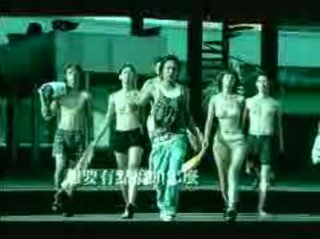
Now jump to the year 2004 to Taiwan. Singer Alex To made it more Nelly-like (just like "Hot in Herre") by adding an element of taking off one's clothes in his version of the song, "Take Off" and a bit more English, which is the lingua franca of East Asia. Note the evolution of this meme as seen in dance steps or people stripping their clothes.


Watch DJ Ozma's video here.
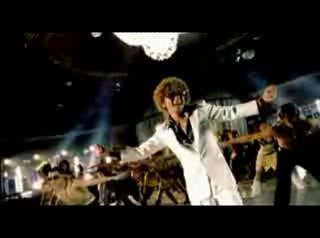
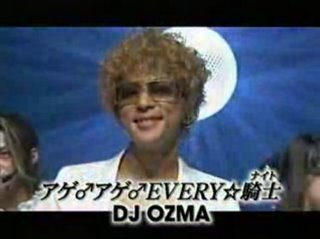
And in 2006, the Japanese group DJ OZMA (really a side project of the group Kishidan) released their version, titled, Age Age Every Night. (pronounced "ah-geh"). It's known in Japan that DJ Ozma is doing a cover of DJ Doc's song. He kept Alex To's visual message to take off one's clothes, and added a bit of 1970s disco in a seeming act of homage to the roots of Boney M! You can see their tongue planted firmly in their cheek with their homage to MC Hammer's style of dancing and DJ Ozma's crazy afro. Note how the dancing has changed, especially how people hold their hands out and go from side to side while chanting, "na na na na na." (compare to dance steps in the Korean original by DJ Doc.) And yes, those scantily clad girls and topless men are tame by American music video standards, but are pushing the envelope by Japanese ones. I guess it might have the tacit approval of the Japanese government: after all, something has to be done about the falling birthrates!

It's good to know that despite all the tensions between governments in East Asia, pop music and hip-hop has the potential to unite us all. After all, young people don't have to speak the same language to appreciate a nice beat, fancy dancing, and lots of sweaty bodies.

Wednesday, April 19, 2006

First William Hung, and now we present...


I"m going to China this summer to learn about that great nation and get in touch with my Chinese roots, and so I thought it would be good to blog about something Chinese.

Anyway, I stumbled across a clip of a Chinese singing contest. Oh my goodness, someone please tell me that this is a skit from a Chinese comedy show, and that she's supposed to be bad... Or does this reflect the state of Chinese R&B music? I wonder if this is from a show similar to Mengniu Sour Yogurt Super Girl Contest, the Chinese equivalent of American Idol (or Pop Idol, as the show originally was called in the U.K)! Who is this woman, and what in the world is she catwailing? She makes William Hung seem like a musical genius! And why are the people applauding for her? Are they humoring her, or do they seriously think she is good?

By the way, the Chinese must be laughing at how bad American singers are when they try to sing traditional Chinese music.

Wednesday, April 12, 2006

Hard Gay


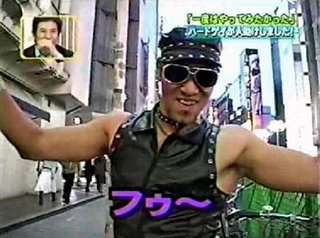
You got to see these videos to believe this. This person is Razor Ramon Hard Gay, or "Hard Gay" for short. Think of a Japanese version of the leather guy in the Village People, and his job is to help the average person on the street, such as helping old ladies cross the street, protecting young ladies from pick-up artists, or teaching kids to eat their vegetables. And his secret weapon is his crotch shake. Can you believe the stuff that goes on in Japanese prime time? Hard Gay is the alter ego of the comedian Sumitani Masaki and has become quite popular in Japan.

Here's some clips of him. In this one, he helps a struggling ramen shop by trying to attract customers. Here, he helps people in the streets. In another one, he accuses Yahoo Japan of taking his trademark cry, "whooo!!!"

And you can see him in his music video doing what else...a Japanese cover of "YMCA"! (actually his cover of Young Man, a 1970s Japanese cover of YMCA)

Wednesday, March 15, 2006

Dealing with network racism?


First of all, the book is finished! YEAAAHHHHH!!!!! Now I"ll probably sell only 500 copies at the most, but hey, it's done!

Next a quick note about the World Baseball Classic. A few days ago, my wife and I were watching a broadcast of the Japan versus China game happening at the Tokyo Dome and we noticed the word "JAP" staring at us from the screen. Yes, in a brilliant move of cultural sensitivity, ESPN2 used JAP as shorthand for "Japan" on the scoreboard. My wife was so steamed that she kept screaming at the TV set whileI wondered if ESPN would ever dare to abbreviate a Nigerian team the same way. I understand that so many Internet users commonly and insensitively use the word "Jap" (which is a disgusting trend but not the subject of this post) but ESPN?

So she twisted my arm and made me send an email to ESPN.com complaining about the insensitive designation. Of course, I received the following form letter, which I have edited for you:

Date: Sat, 04 Mar 2006 15:15:46 -0800
Subject: Thank You
From: "Ask ESPN TV"

Hi.

Thank you for your e-mail. It has been successfully routed to a customer
service representative.

Due to the large volume of e-mail we receive, we are unable to respond
to general comments, but they will be passed on to the appropriate
network executives.
[....]
P.S. Would you like to continue to express your opinions about ESPN and
play a part in the programming decisions that get made? Come join the
ESPN Viewer Panel where you can take surveys and earn prizes. Please go
to http://www.espnviewerzone.com to sign up. You must complete the
registration process to qualify.

Thanks!!


So this is what you get when you complain, a form letter. Frankly, I was too busy catching up with pile of work I had neglected while writing my manuscript so I put aside for the moment visions of an internet letter writing campaign.

And then tonight, I caught the ending of the Japan versus Mexico game and saw the words JPN staring at me. Maybe it was my email, or more likely, the hundreds of emails sent to them, but yes, they had changed the word in question. My wife was happy (and even happier that Japan won the game). I wrote a letter of thank you to ESPN. (Curiously, Sports Illustrated has the game listed as JAP vs CHN. Hmmm...)

But then, maybe the JAP designation was made by someone in Japan. After all, there's a line of clothing store in Kobe, Japan called "Club Japs".

And the largest underground shopping mall in Japan is a place called "Whity Umeda". Can you imagine telling the kids, "Hey, let's shop at Whity!" Ah, ignorance cuts both ways.


Saturday, February 18, 2006

The Japanese Secret: Better living through anal constriction

Here I am driving myself crazy editing my book manuscript and staring at the computer screen. So, during one of my breaks, I did some google searching on Japanese Engrish and lo and behold, came up with this unbelievable book:
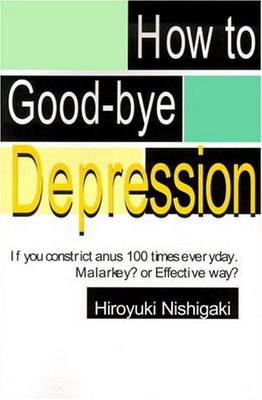
How to Good-Bye Depression: If You Constrict Anus 100 Times Everyday. Malarkey? or Effective Way? by Hiroyuki Nishigaki.

Yes, this is a real book. Sold on Amazon.com.
"I think constricting anus 100 times and denting navel 100 times in succession everyday is effective to good-bye depression and take back youth. You can do so at a boring meeting or in a subway. I have known 70-year-old man who has practiced it for 20 years. As a result, he has good complexion and has grown 20 years younger. His eyes sparkle. He is full of vigor, happiness and joy. He has neither complained nor born a grudge under any circumstance. Furthermore, he can make love three times in succession without drawing out.

In addition, he also can have burned a strong beautiful fire within his abdomen. It can burn out the dirty stickiness of his body, release his immaterial fiber or third attention which has been confined to his stickiness. Then, he can shoot out his immaterial fiber or third attention to an object, concentrate on it and attain happy lucky feeling through the success of concentration.

If you don't know concentration which gives you peculiar pleasure, your life looks like a hell.

Besides shooting out a big blank from your buttock, you can feel as if your root chakra leaked sweet hot mucus."
Now, I've checked Nishigaki's homepage, and here's what he has to say on a FAQ about his method:
(1)how long do you squeeze each time?

3-5 minutes. 100 times in total a day is OK if you are busy.
The purpose is to temper the muscle of anus and of abdomen, so no stool discharge is OK, only half an inch is OK, only 5 minutes is OK. In my case, I release fecal matter 2-4 times a day.
within a few seconds.

(2)how soon will we start seeing results?

In a few months. We will begin to have good complexion. Irony, nervousness, irritation, thick-wit, dreariness of our eyes will begin to decrease. As a result, we will begin to be often asked by other people "You have changed for better. Have something good happened to you recently?"in a few months. Woman will become more charming even without make-up.
He's appeared on over 70 American radio talk shows to promote his method of well-being.

Scary thing is, I think this author is dead serious.

Even scarier, this book was #300,735 on Amazon.com, beating out books like:
  • Franny and Zooey, by J.D. Salinger.
  • Border Patrol Exam (Complete Preparation Guide)
  • Calvin Coolidge: A Biography
  • Mathematics : A Discrete Introduction
  • Selected Myths (Oxford World's Classics) by Plato, Catalin Partenie
  • The Power Of A Positive Teen, by Karol Ladd
What a bummer it is to be an academic writer. Do all that research on our great president Calvin Coolidge and be outsold by an author who claims that anus-clenching can banish depression. And scary to think that we have more people practicing anal constriction than studying for the Border patrol exam.

Here's a link to a video by Rob Pongi, crazy gaijjin who lives in Tokyo. He puts Nishigaki's theories to the test.

But be careful: Nishigaki's method to banish depression may be too powerful for casual use. Here's what one reviewer has to say:
I cant stop shooting buckets of old black excrement! Help!, September 18, 2001
Reviewer: A reader from lakewood, CO United States


I followed the directions, did the recommended 3 weeks fast, and cant stop shooting buckets of old black excrement! The sweet mucus wont stop either! I constricted anus everyday, followed by denting navel 100 times after constricting anus 100 time in the style of the longed lived british, and the flow of sweet hot mucus from my third attention wont stop! I do feel less depressed however, so the book gets 5 stars.
Now go out there and give me 100 constrictions! And that's an order!

Tuesday, January 31, 2006

Here in Hawaii and Dogs in Japan


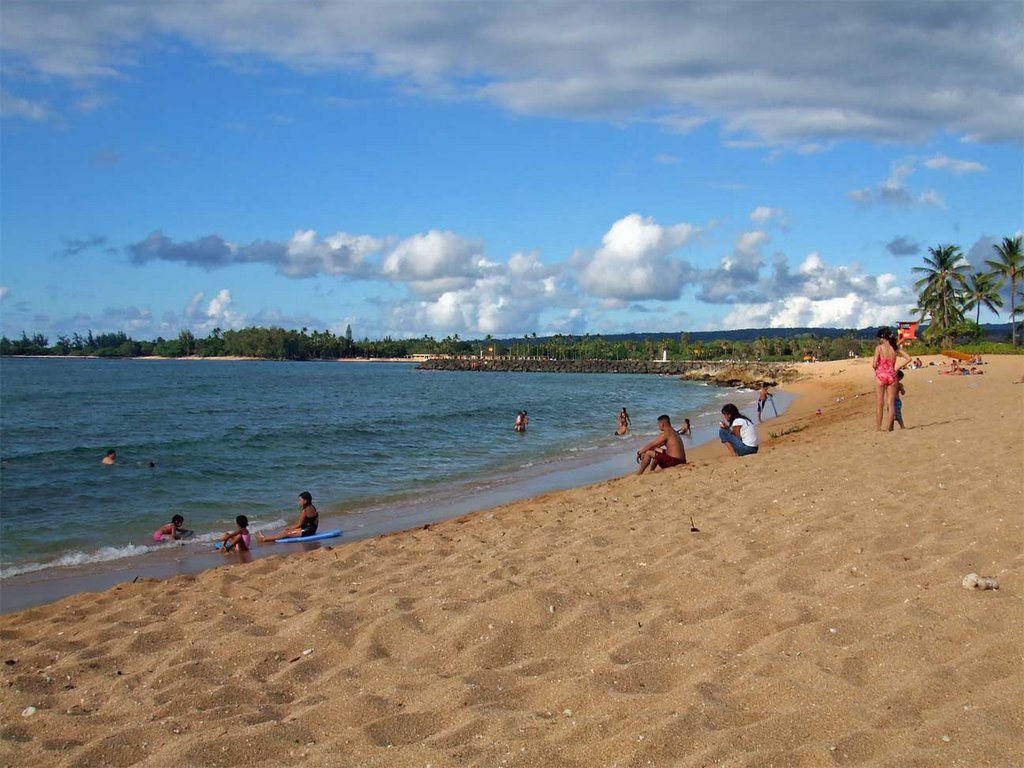
Picture taken Sept 21, 2005 at Haleiwa Beach Park

Here's another retroactive blog (confused by all the switching of dates?). If you are confused, well so am I. Sometimes, I think Hawaii must be the most Japanese place outside of Japan. Look at the picture above, which I took a few months ago. My wife and I were enjoying Haleiwa Beach park, one of Oahu's more underrated beaches. Here we were, in a rural town, when I see Japanese tourists even at this semi-remote outpost on the island! I wonder how they feel: flying to Hawaii to get away from it all and then they bump into their fellow Japanese screaming to each other in Osaka dialect.

On the one hand, they must not like it, this does destroy the atmosphere of being in a foreign country. On the other hand, it is truly scary being in a foreign country, and so it must feel reassuring to see other Japanese. Kinda like Americans overseas - can talk about wanting to be among the locals, but panic sets in when far away from other Americans and the nearest McDonald's.....

Back to my Japan vacation...Here's the entry that should've have read August 09, 2006.

Here's a pic of Choco, my Japanese cousin's dog. She was abandoned in the mountains, and became part of the family through a Japanese rescue group. Doesn't she remind you of a dog-deer? Naturally, she is a bit scared of people, and only today has she finally warmed up to me and came to me while I was watching TV with my aunt in her room. Strange dog - when we take her for a walk, she gets all stressed out by the city and tries to run back indoors. She also shows interest in me, then when I try to touch her, she runs away. But I know she's not dumb - she probably knows more Japanese than most Americans. How many of you readers know the Japanese for "sit" or "wait" or "come"?

Sunday, January 29, 2006

Still too busy to post!


This is my daily winter distraction ...

Can you believe that I still haven't posted the pics from my final days of my Japan trip? I"m currently working on a book on Japanese TV, and after begging the editor, got one final deadline extension of a few weeks. And, like any budding writer, I squander my newfound time to become perfectionist, and constantly revise...

Almost all of my free time has been spent typing on the computer , while I look out the window and see perfect beach weather just beckoning me to come outside. That is the torture of living in Hawaii: it is so hard to do work when you know that a tropical beach is just a 20 minute drive away! Like setting a buffet table right in front of a starving man chained to the wall...

Luckily, Dana from Dana's Tea House is slogging through my 500+ page mess of a manuscript and editing what she can. Poor woman, nothing worse than to read the babblings of an academic who can barely write. Anyway, I plan to upload more pics from Japan and bring a sense of closure to my Japan blog. In the meantime, check out the posts I have put up retroactively, and some of the links I put on my post about my trip to the Battleship Yamato Museum in Kure, Japan. I even found some Starblazers songs to link up with!


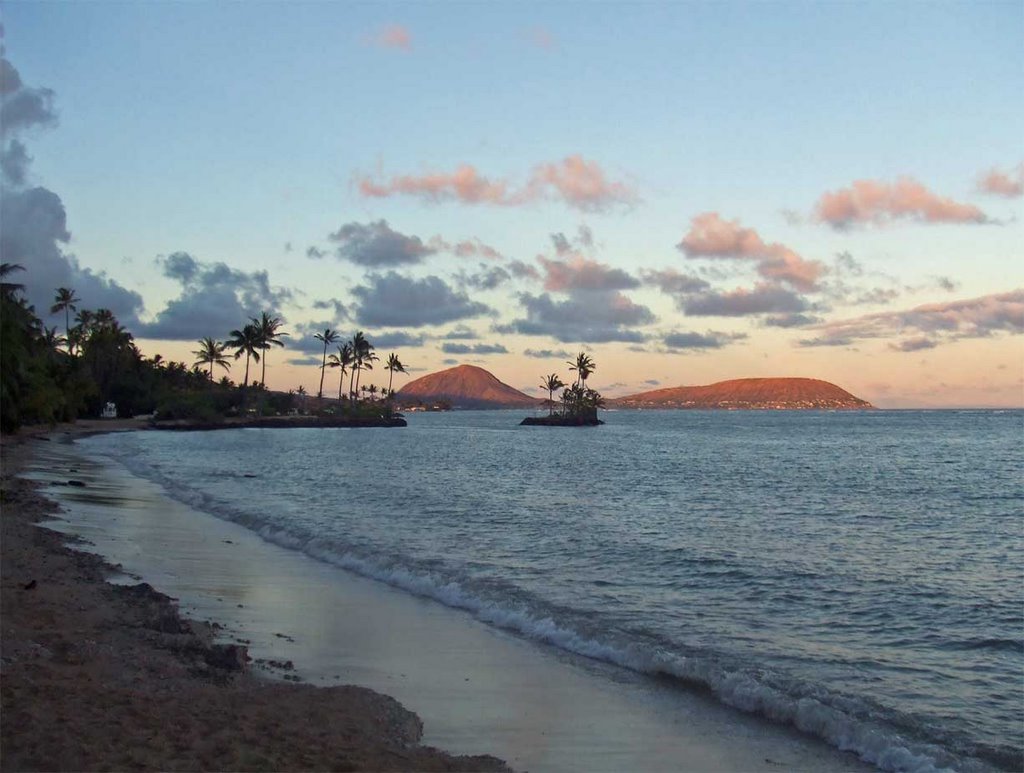
Beach in Kahala, taken Sept 2005
Should I start a new blog, one that reflects my new life in Hawaii as a "returned local" and start showing you how a "kakure mainlander" views Hawaii with changed eyes?

Sunday, September 18, 2005

Quick Update


Yes, I am back in Hawaii and I want to finish the blog of my trip to Japan, as I have a few more pics and notes of interest. However, my pics are on my laptop, and my wife took it with her when she had to return to Japan for a family emergency. I will update at a later time, to give my trip a sense of closure, and a few instances of reverse culture shock.

Keep looking for new posts below, as I will add them retroactively. I still have some interesting stories to tell.

Thursday, August 11, 2005

Lunch with Michiyasu

Michiyasu looking at the picture of him on my blog

After some phone tag and missed opportunities, I finally managed to get in touch with Michiyasu and we agreed to meet for lunch. It has been a decade since we last me, and we had a lot of catching up to do.

When I was a student back in the 1990s, we used to go out on the town together a lot. I remembered Mitch as being one of the most outspoken Japanese I had ever met, and he is quite the individualist. I think he should've been born in the U.S., as his outspokeness had the potential to grate on other Japanese and would've fit in much better into American society. Times have changed and he has learned to adapt to Japanese society. He has become a family man, with a wife and kids, and works hard at two jobs to support them. At first, he seemed like he had turned into your stereotypical Japanese man, and we found it hard to talk, but after some time, we began to warm up, and it was like old times again as the conversation flowed freely. He is a hard worker, and is utterly devoted to his family. And yes, he is still a huge fan of American football! There is a Pittsburgh Steelers fan in Hiroshima.

Sunday, August 07, 2005

Meeting John and another late-night stroll


(Written after the fact, from my home office in Honolulu Hawaii)

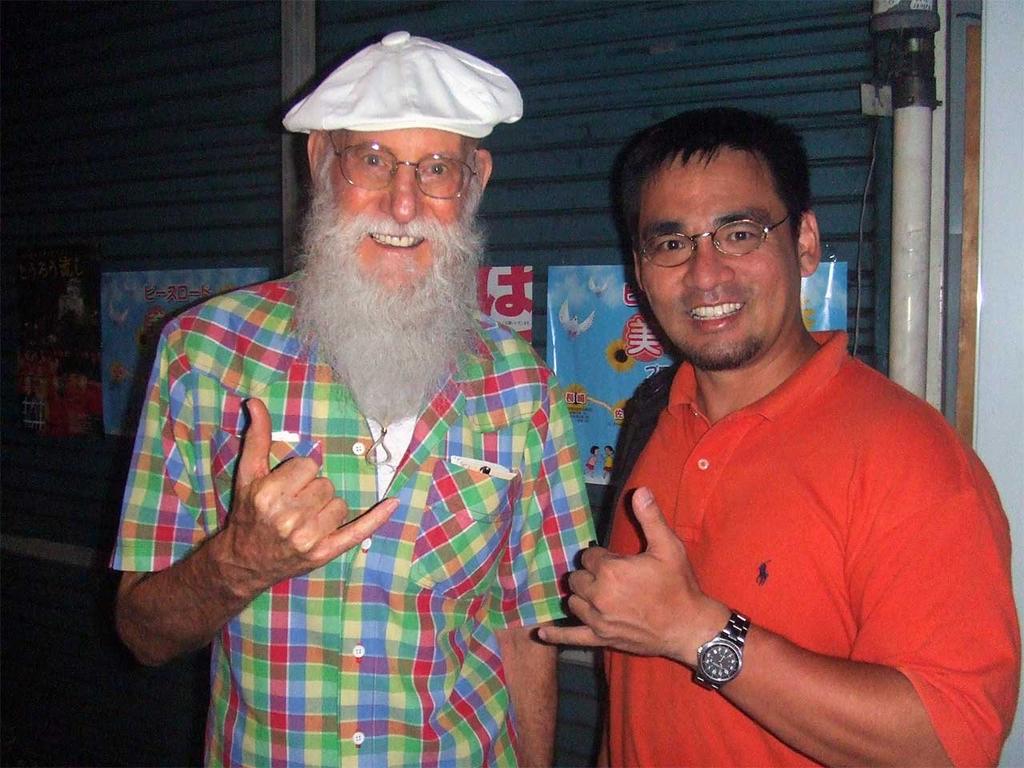
Met John today. Now this man has lived an interesting life, 20 years in the marines and then retired. For the past several years, he shuttles back and forth between Hiroshima and Hawaii, in Japan during the summer, and Hawaii during the winter. The base at Iwakuni is nearby Hiroshima, and there are many military facilities in Hawaii, so he can get free medical and dental care, and can buy goods at the PX.

Boy is he a popular person! Passers-by on the street occasionally kept waving at him, as if he were a famous celebrity. When I asked John, he said they were friends saying “Hi”. I have never met anyone this popular before! The secret? In America he would be just another old man living on his pension. But at the International Center, Japanese come up to him to practice English, and he has a whole bunch of friends. He told me it is a good feeling to have people say hi to you on the street. Indeed, he is a bigger part of a community in Japan than in America. What gives? Why do Americans treat our seniors this way?

Also, he meets so many Japanese at the Hiroshima International Center because they like to practice their English with him. This is a place established by the government for foreigners to hang out and meet Japanese. There's free newspapers to read, the TV is set to CNN, free classes in Japanese run by volunteers, and (when I was there last year), free Internet accesss! I laugh when uninformed people tell me that Japanese are so xenophobic - yes, Japan does have its share of anti-foreign sentiment, but do we treat our foreigners in America this well? Hawaii needs an International Center. We need to give seniors a way to meet other people and be involved with society. And so many international students need a place to hang out and meet other Internationals and locals. If we had an International Center, we could have senior citizens meet up with exchange students who want to meet Americans and practice their English. And Americans could practice their foreign languages. And we would have far less lonely people around.

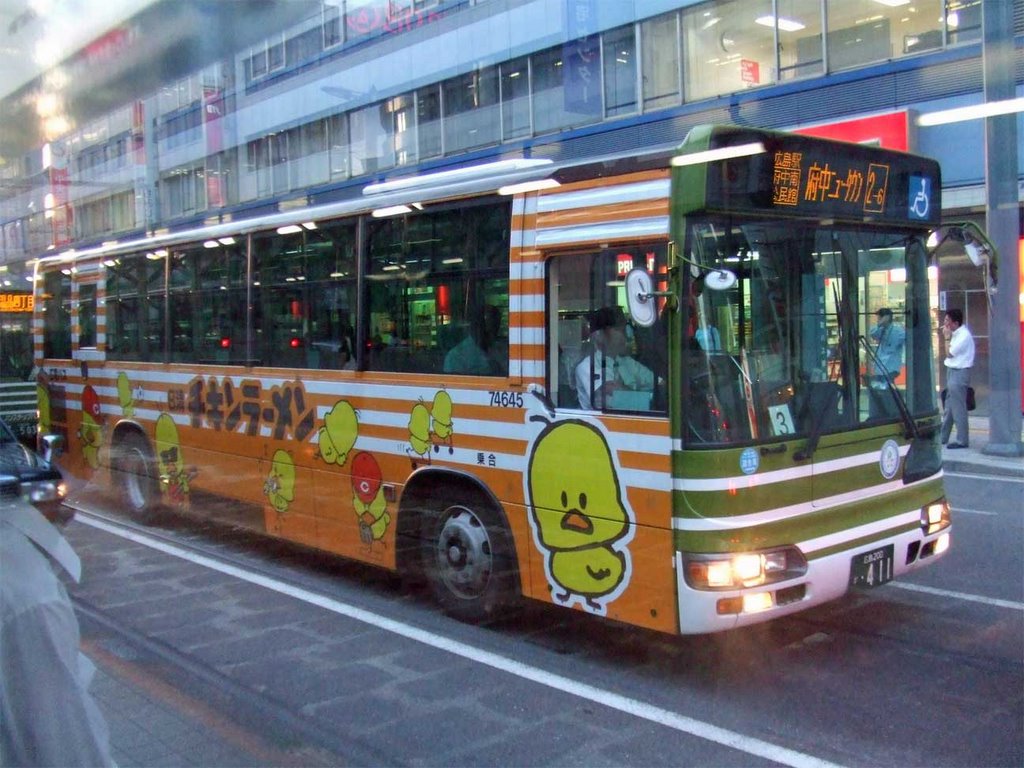
Cartoons are everywhere. This bus advertises "Chicken Ramen." Why eat ramen made from the bodies of cute chickens, I don't know...


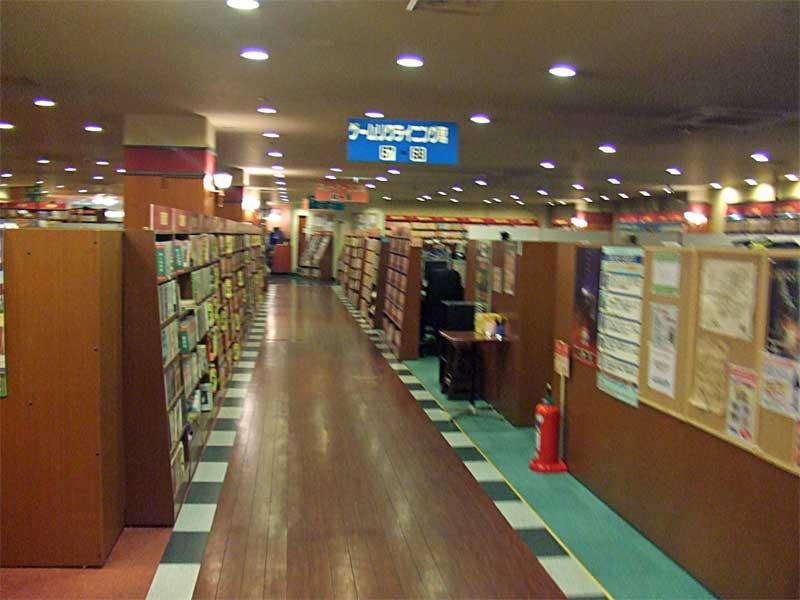
Once again, I went late night to an Internet cafe. I worked so late and had so much email to read, but look at how nice this place is. You have all these comics on the wall you can read, and all the soft drinks and coffee you can drink. Lots of videogame connetions for serious online gamers.
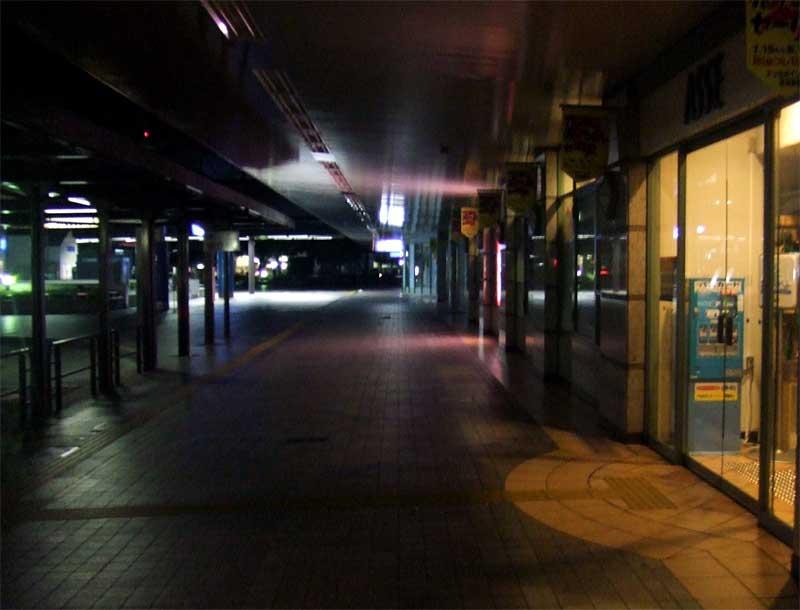
Being addicted to the Internet, I finished at around 2:00 am, and on the way home, got spooked by the total lack of people around the station area, except for a few angry looking cab drivers. Remember, this is the central train station in a major city in Japan!
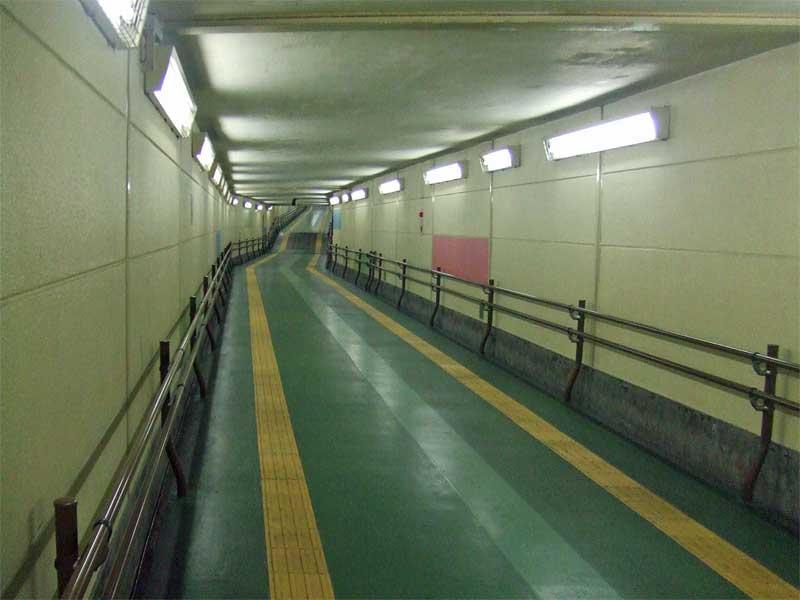
So I asked a police officer who was sweeping the street (yes, that is the duty of a police officer), if it was safe to go through the station's underground pass, where you could see homeless people sleeping. He gave me a strange look and said, “of course.” I walked through the sleeping people and through the underpass. Here’s a picture and remember, this is close to 3:00 am at night in a major city, and not a soul in sight! I made it back safely. Of course, I would not recommend that other foreigners go strolling around in the dead of the night, and that I did this only because I blend into the background because I look Japanese, and of course, am physically bigger and stronger than most men here. Still, it made me wonder: are Americans that paranoid, or are Japanese that naive?

Saturday, August 06, 2005

Battleship Yamato Museum in Kure

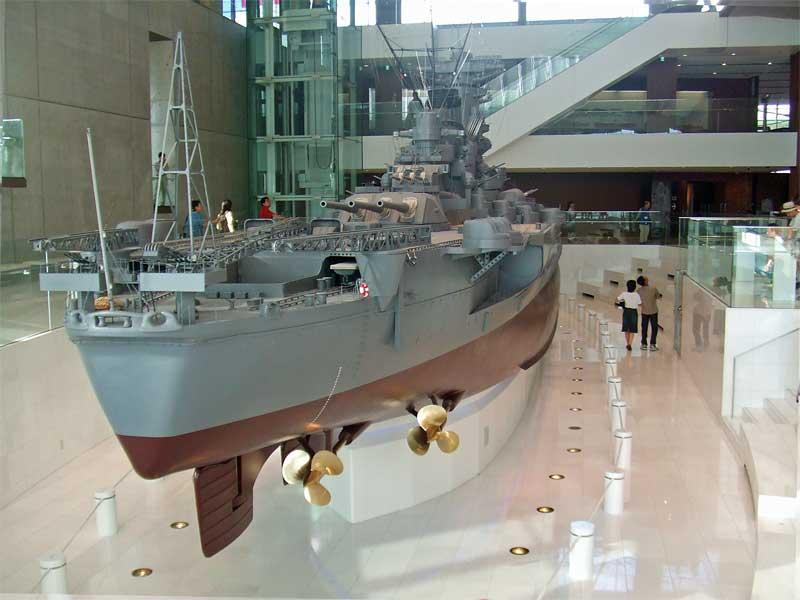
1/10 scale model of the Yamato
So now that we had our share of peace education, we went to the direct opposite: war education. We went to the Battleship Yamato museum in Kure, Japan. Kure is a port town, famous for its shipyard building capabilities. It was here that the Imperial Japanese navy built a shipyard to churn out its high-quality navy. After the war, this city converted to civilian use, and built many tankers and ships. (I used to play a card game called “Naval War” when I was in high school, and I was happy whenever I received a “Yamato” card, with its 18 in guns that could easily destroy other ships.)

Now you get a very different interpretation of the war than at the Peace Park. For one, you saw tons of models of Japanese navy ships. Then, this exhibit went into great detail about Japan’s wars: Sino-Japanese war, Russo-Japanese war, World War I, the Sino-Japanese War beginning in 1937, and then the Pacific War (what Japanese call the war with America, the British, and the Dutch). In a sense, this was the missing half of the Hiroshima Peace Park museum, which only focused on the suffering of the Japanese. But the interpretation of the war was more right-wing: the war was a quite justifiable affair. It focused on how Japan was continuously encircled by the West, and in order to avoid being colonized, it decided to take establish an empire in China, an action no different from what other Western nations were doing in Asia.

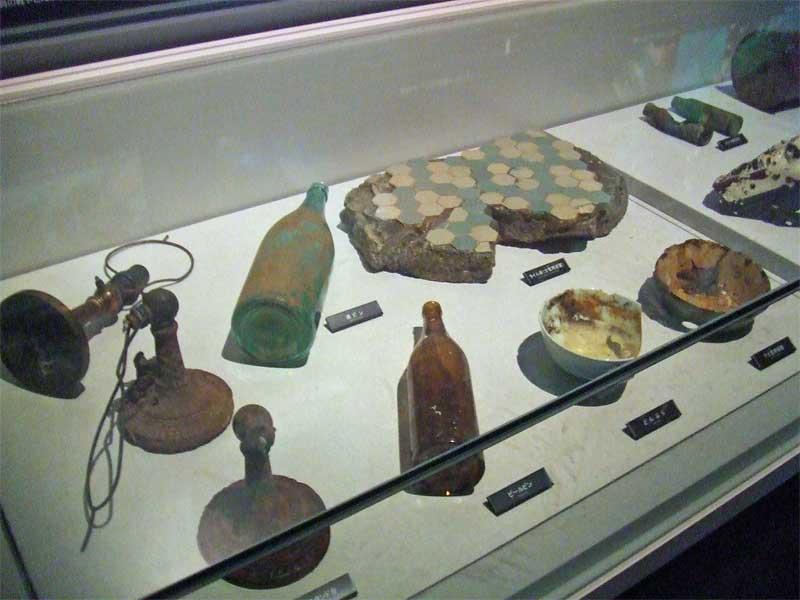
Also this museum does glorify the cult of the suicide warrior. The Yamato was sent out on a final tokko, or “special attack” (Japanese euphemism for “suicide mission”) in April of 1945: go to Okinawa without air cover and attack the invading American forces. With a small armada of escort ships, it went off to Okinawa, but never even made it far from the Japanese archipelago. Wave after wave of American planes picked off the escort ships, and continually rained bombs upon the Yamato, sending it to the bottom of the sea. Several thousands died and only a few hundred survived. This fits in with Japanese samurai movies, where the hero makes a doomed final attack, and is slowly cut down to pieces by masses of the enemy, but valiantly keeps charging forward until he dies. If you’ve watched the Last Samurai, you know what I mean. Anyway, here are some artifacts from the wreck of the Yamato salvaged via a deep sea submsersible like the one that explored the Titanic.


Little known among most people, even historians, is that a Japanese-American served aboard the Yamato. A Japanese author, who survived the Yamato’s final suicide mission, made reference to this point: the Nisei (second-generation Japanese American) was in Japan when the war was started and so he was drafted to listen to American radio intercepts. But because he was born in America, the Japanese sailors mercilessly bullied him and the author could hear the Nisei crying himself to sleep.

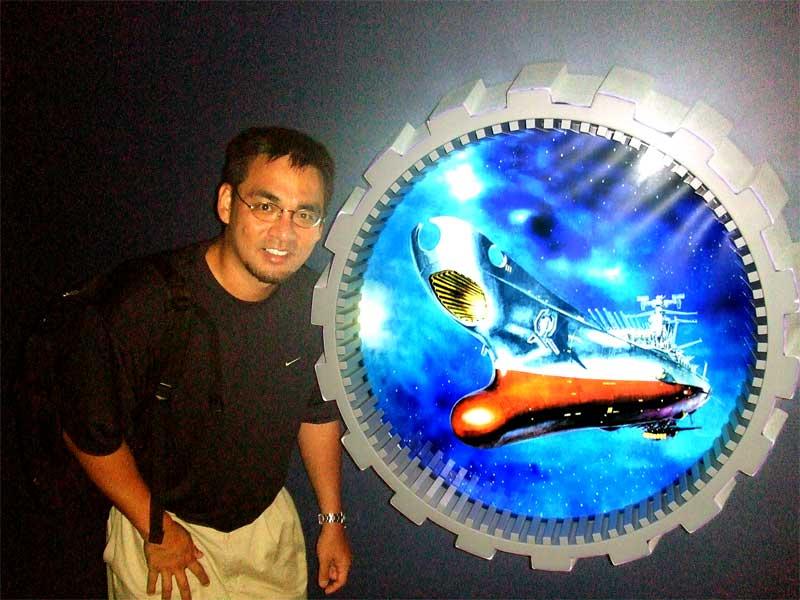
After seeing a memorial wall with the names of the Yamato dead, we then went to the other parts of the museum, a children’s museum, and then the fun part: the comics! We came upon a display for the cartoonist Matsumoto Leiji (why he used an “L” instead of an “R” I do not know). In the 19970s, he wrote Uchu Senkan Yamato, a sci-fi series about a spacecraft based on the battleship Yamato, complete with gun turrets and all.
In the conclusion of the series, the Yamato makes a suicide attack against the enemy, ramming itself (after most of the crew has one by one heroically died in combat) into the enemy spaceship, thus saving all of Earth. Hmmm...doesn`t it sound like the final mission for the real-life Yamato? This cartoon was reborn in the U.S. as Starblazers, heavily re-edited to strip away the Japanese military nuances of the film, and with an English version of the Yamato cartoon song (that sounds like some Japanese march): "We`re ooofff to outer space, we're leaving mother earth, to save the human race..."(Yes, click on the link. You'll hear a .mp3 of the theme song). BTW, here's a link to the Japanese version of the song. For some reason, it sounds less militaristic than the American version. A remix perhaps?

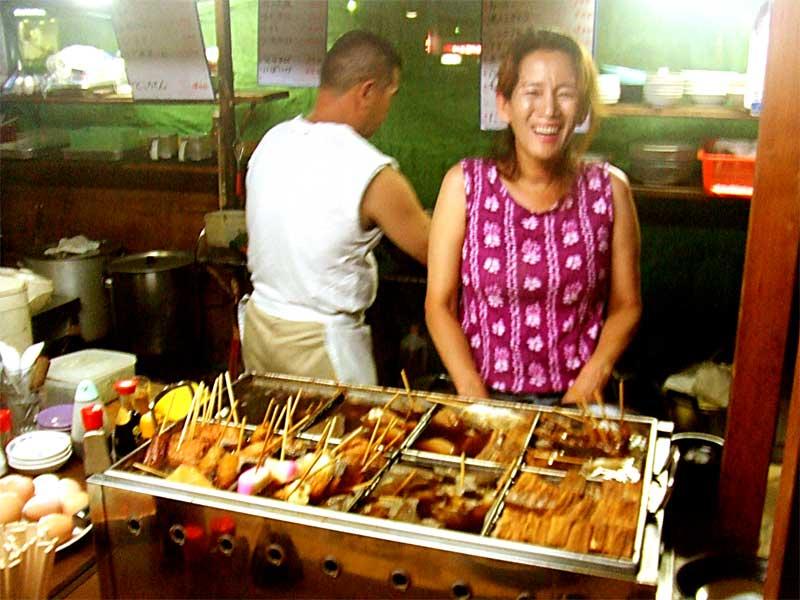
Afterwards, we went to a yatai street stall for some gyoza dumplings and ramen. Here is some oden, boiled goodies you can pick and choose. The customers at the stall were so funny. One older man, quite drunk, kept rambling about something. Despite all my Japanese language traiing, I could barely understand what he was saying. Kazuhiro told me not to worry as he could not understand either. Everyone was cracking up at what the man was saying. I asked to take his picture, and so he told me, “Do not show police” in Japanese and then took off his shirt! Then he posed for me with the yatai stall owner. So who made up the myth about Japanese being straight-laced and conformist?
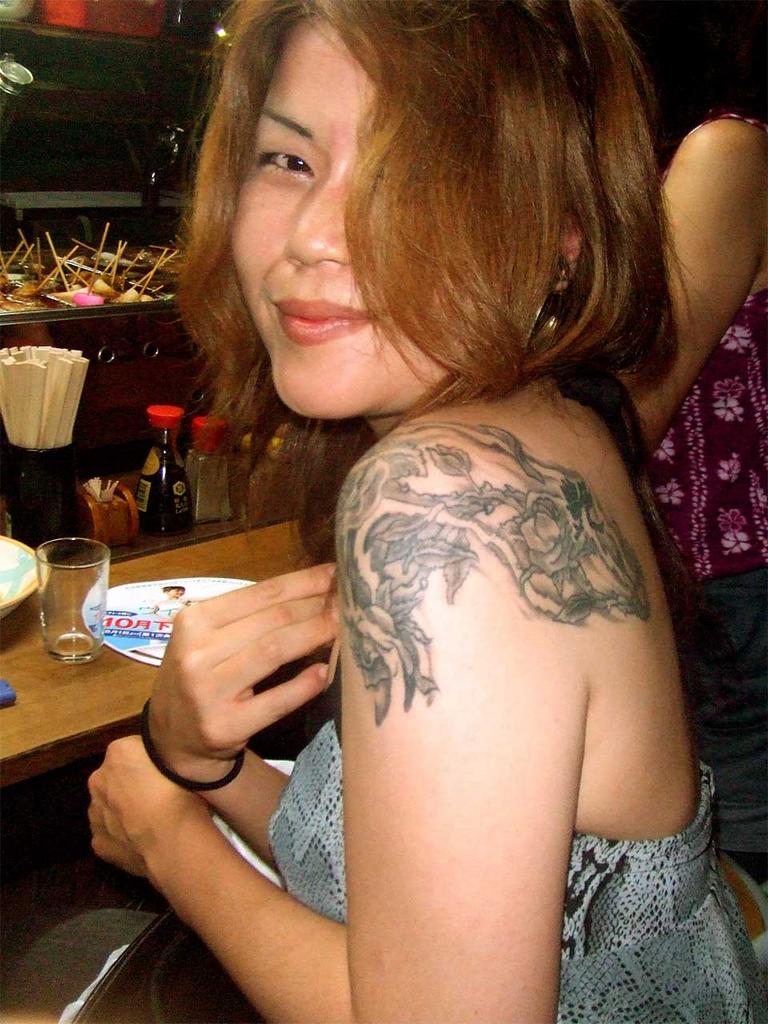
And then, another shock. I asked the woman next to us if I could take a picture of her and her boyfriend’s tattoos. We had made small talk earlier. And then, only after I took her picture and was about to leave, did she spoke to me in very fluent killer English! Now why didn’t she just speak to me in English earlier? Other foreigners complain that the Japanese always talk to them in English. Me, being a kakure gaijin (hidden foreigner), people seem hesitant to talk to me in English, even when they find out I am an American. So sometimes I end up talking to people in Japanese, and only deep into the conversation do they even let on that they are fluent in English. Is this some kind of test of my Japanese ability?I found out from our conversation what she originally hailed from Osaka. When I left, I could hear the other customers compliment her on her English. Now she’s not yakuza, but simply has a very beautiful tattoo, which she kindly let me photograph. She learned the English while in college and from her foreign friends.
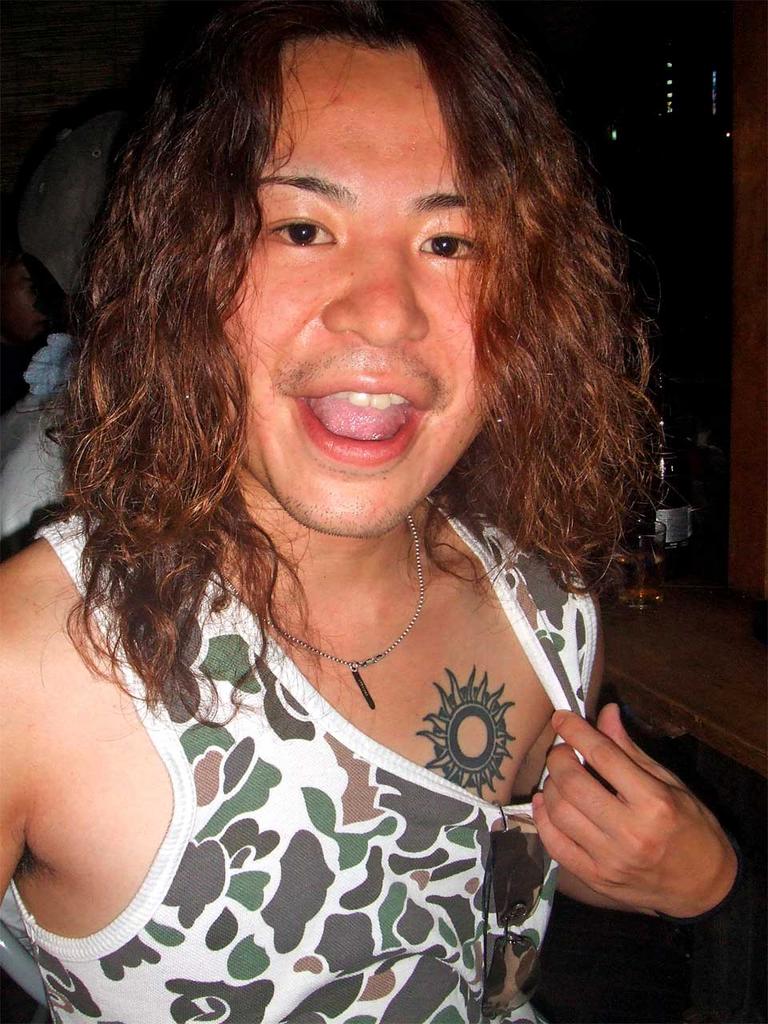
Her boyfriend also pulled down his shirt to reveal a tattoo. Again, who says the Japanese are shy conformists? Like I said, you never know who can speak English in this nation! The people you think can speak, like professionals, cannot speak, and the people you least expect to speak, are the most fluent.

Nightime ceremony for the A-bomb victims

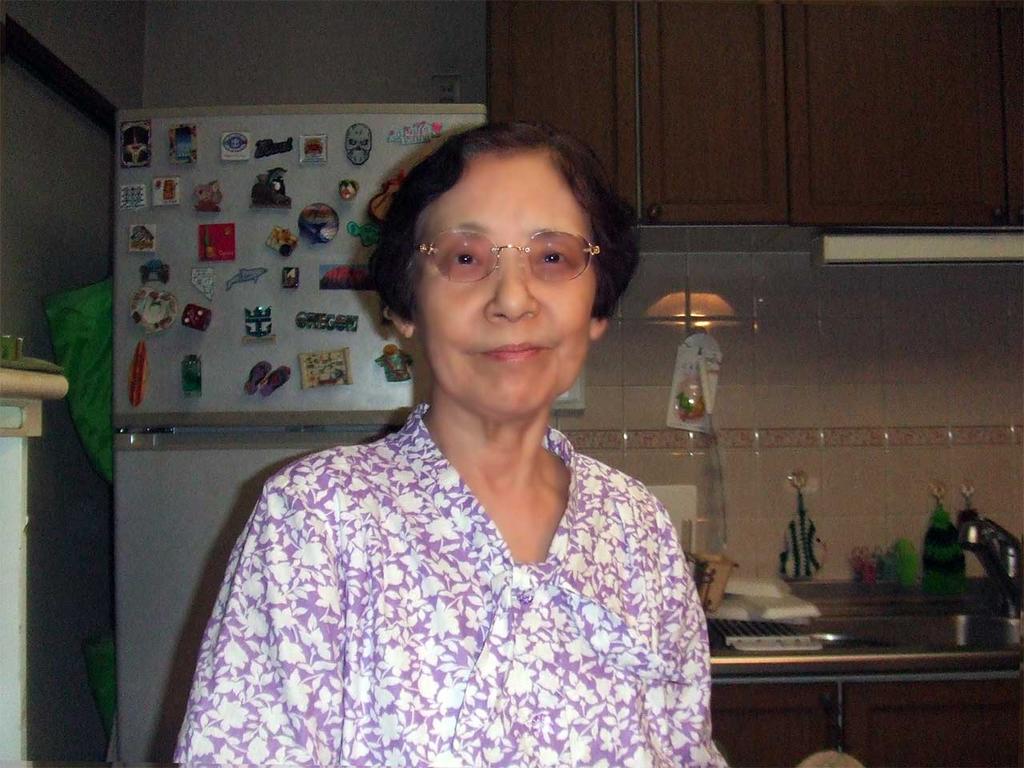
At dinner, we watched TV and saw that there was a huge orchestra concert at the Peace Park, and saw tons of people. We decided to wait a little rather than brave the crowds again. Aunty was finally willing to pose for a picture.
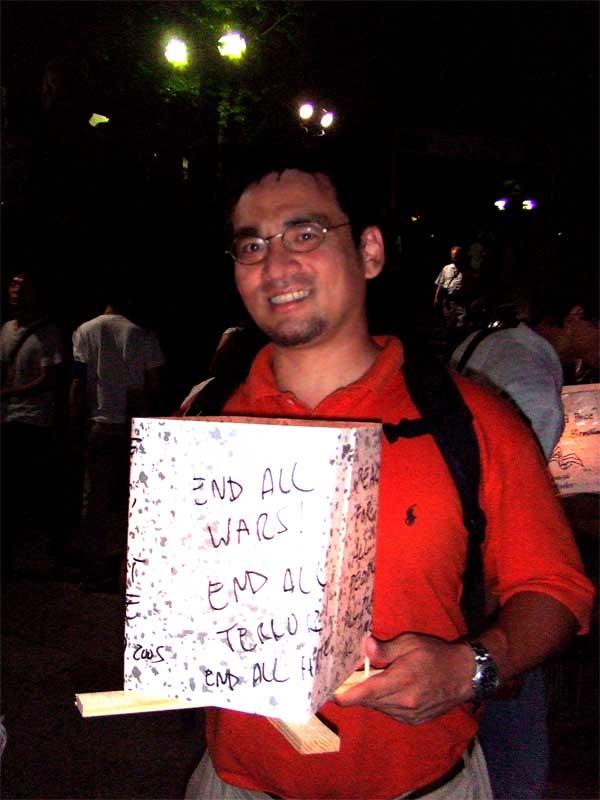
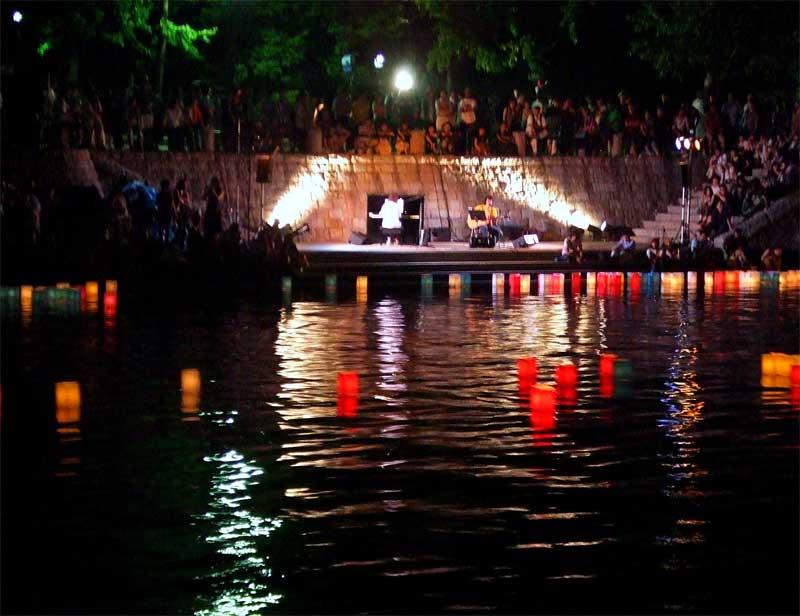
Kazuhiro and I caught the bus and we went back to the Peace Park. Then we went to float lanterns for the dead down the river. Huge crowd of people, but a bit more relaxed than in the morning. A-bomb dome bathed in a ghostly white light. I bought a lantern and wrote messages of peace on it. I floated my lantern at the rivers edge. All the lanterns representing the souls of the victims – a beautiful but bittersweet sight as the lanterns flowed upriver (high tide, so river went up)
On the banks of the river, musicians were performing for peace. One jazz pianist came and performed an agitated version of “My favorite things.” He then played a peaceful and beautiful rendition of “When you wish upon a star.” Again, note the preponderance of Western music. I did see groups of foreigners talking to Japanese youth. We do need more times like this to build grass-roots international exchanges.

I would like to see Hawaii do a similar peace festival. Think about it, we see general public demonstrations like parades with military equipment. But no peace demonstrations sponsored by the government. I would like to see a ceremony for A-bomb victims, with a booth on the side explaining Japan’s war of aggression against Asia, details of why the U.S. government decided to drop the bomb (many generals and advisors against doing so) and the legacy of the bomb. Keep anti-American sentiment to a minimum, and focus on the need for peace – that war is only truly a last resort. Have songs by artists to reinforce the message on the need for peaceful solutions to problems.

Later that night, I took Kazuhiro to the Shack to experience an American-style bar and grill, and to play darts. Along the way, I bumped into John, a retired Marine who I met ten years ago. He shuttles between Hiroshima and Honolulu. We agreed to meet on Monday.And of course, like almost all Japanese, the waitress at the Shack remembered me from last time. Aren`t the people here just memory machines? Or are nikkei so rare over here? Kazuhiro's hands trembled when he took this picture, so I used the computer to sharpen the photo. What a shame since the waitress was quite cute and friendly...

I was shocked as how so many westerners, especially women, were lighting up their cigarettes while they drank. Makes you wonder if all that anti-tobacco education just cannot defeat the glamorous portrayals of cigarettes in the movies. I also realized that people in the West do suffer from an obesity problem – saw so many young western women (including Asian Americans) with protruding guts in this bar. I guess I have been in Japan too long and used to seeing petite people. Middle-aged women, I understand, as gaining weight is part of growing older. But young western women of all races in their twenties being bigger than most Japanese young men? Mission control, we have a problem...
My darts aim has just deteriorated! Anyway, here`s Kazuhiro with a Budweiser:

60 anniversary of the bomb part 1


I somehow managed to wake up at 7:00 pm. The train station was just packed, I mean packed with school kids and foreign tourists on an excursion to go to the Peace Park. And what a sensory overload upon arriving. Saw zengakuren student activists shouting slogans, Buddhist priests chanting before the A-bomb dome, lots of people and school kids with petitions (for what, I do not know), riot police on standby, and just hoards of people, surprisingly many of them foreigners, walking to the Dome.Here are the student activists:
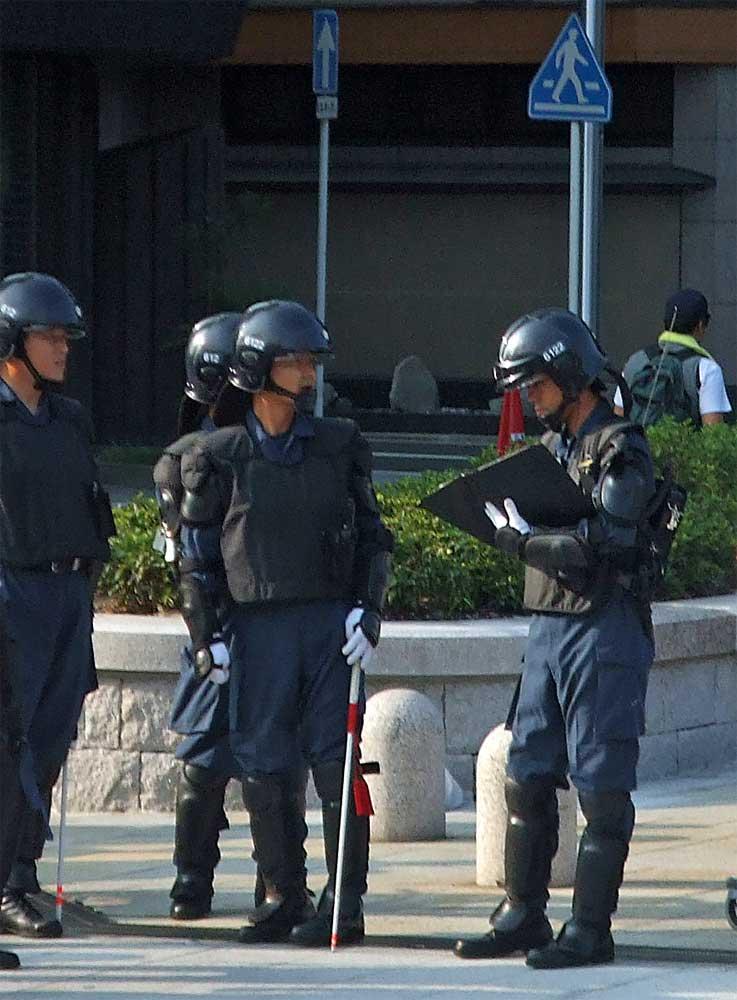
And here are the riot police standing nearby in case the small group of activists decided to emulate their breatheren in the West...
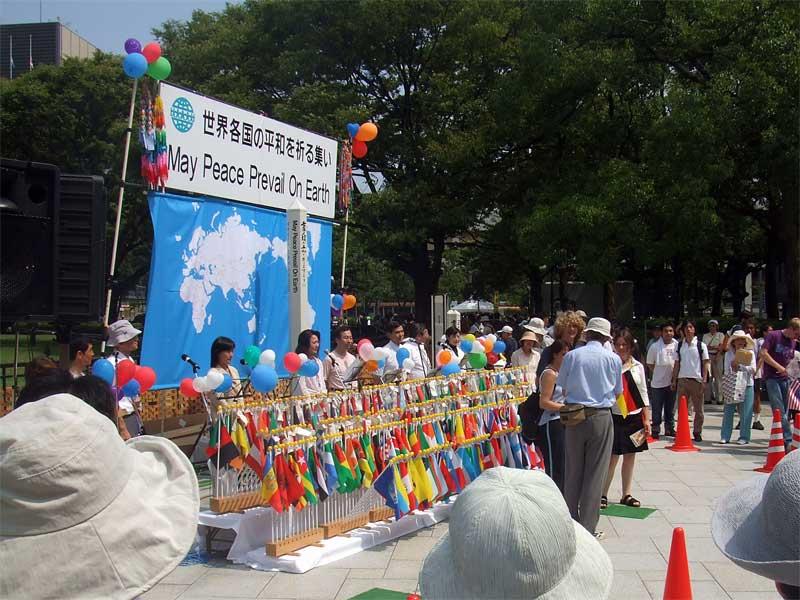
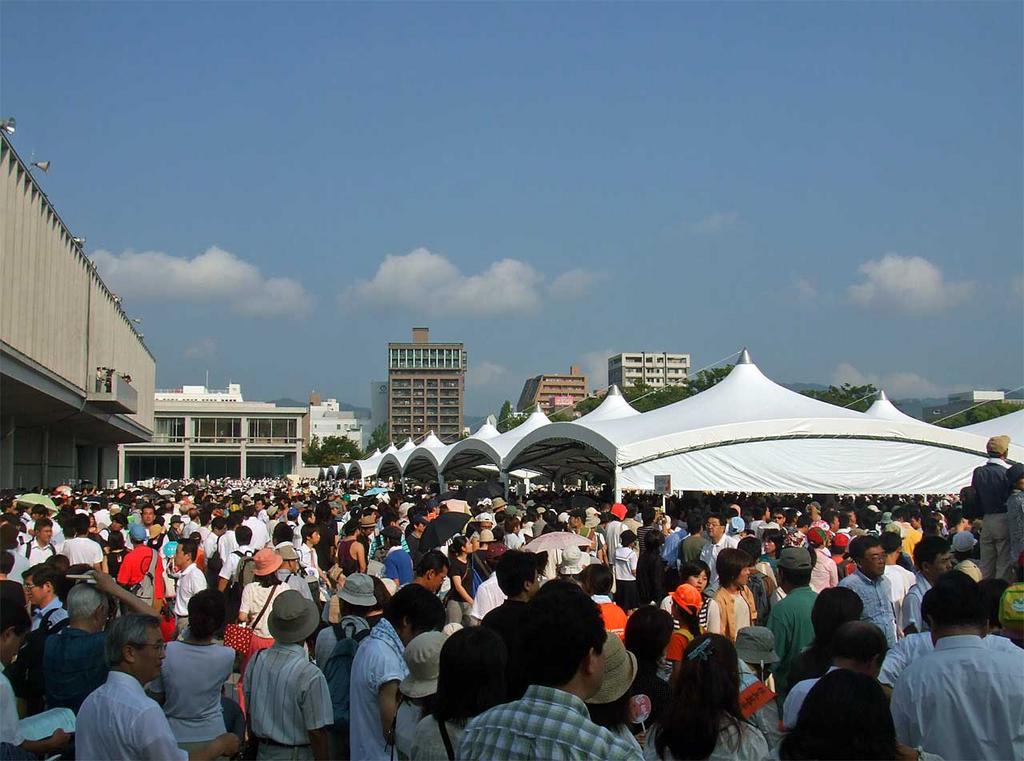
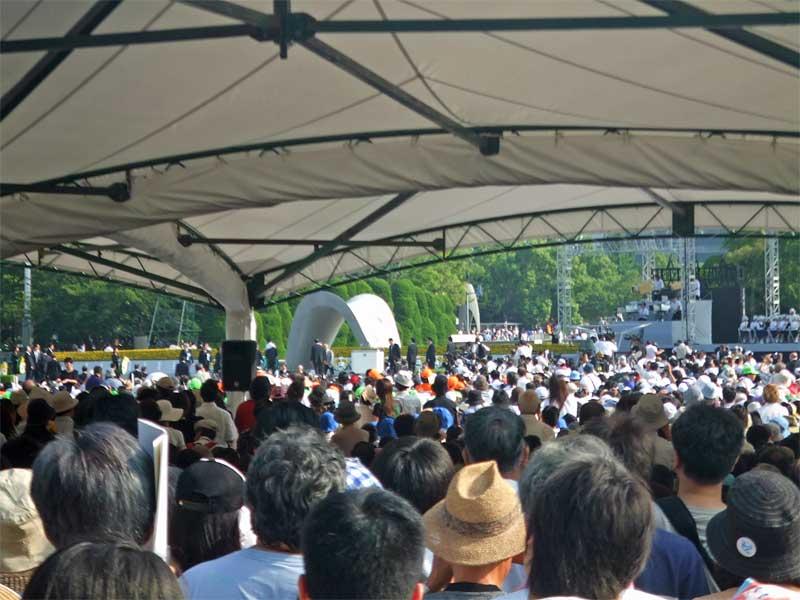
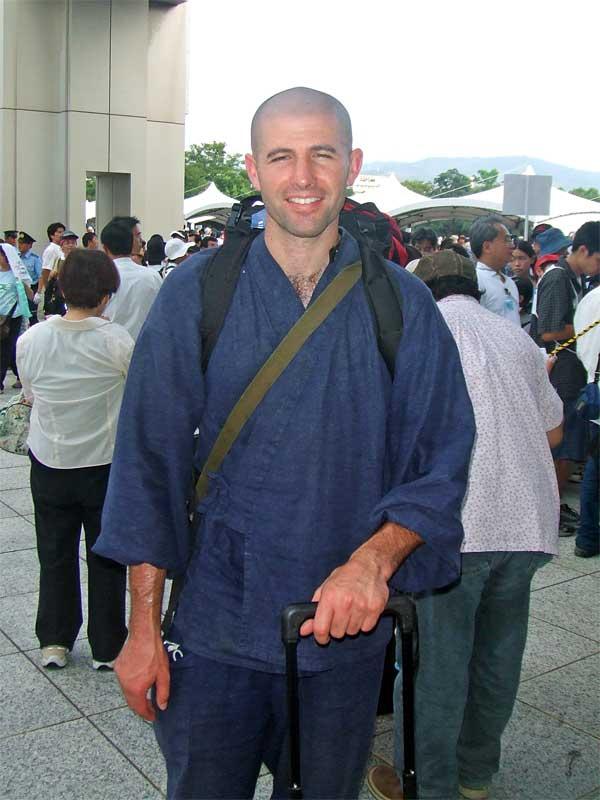
Just too many people at the ceremony. They had set up a tent to handle the overflow of crowds, but the crowd spilled way past the tents. I could have stood way in the back to strain for a glimpse of the ceremony, but would have been in the unbelievably hot sun, not to mention muggy weather.Here is my view of the scene, if I was 6 and a half feet tall...(I held the camera way over my head). So I stood in the shade of the Peace Memorial Museum, far away from the festivities. Then the moment of silence at 8:15 followed by the release of doves. There were more speeches and such, but rather than broil in the sun, I just chatted with people around the park. For example, I met American Zen disciples from Oregon. The one I met in the morning needed help with translation – was there a locker somewhere? He carried pictures of jizos and spread them around. We talked a little and found out that the temple was in Astoria, and that he used to live on Powell Street in Portland.

(Later in the evening, I met another Zen disciple from Oregon. He told me that one of the purposes of the trips was to meet the people who were the enemy. Then once you humanize the enemy, you can never want to go to war against them again.) He also had pictures of jizo to give away. Those Jizo are guardians of dead children and unborn but aborted fetuses.
But I digress. While waiting for the ceremony to end, I also met a teacher from Okinawa, who was with school kid representatives from all over Okinawa. They were there for a student peace conference, and they met kids from Afghanistan, Korea, and all over Japan. I had him and his students pose for my camera.
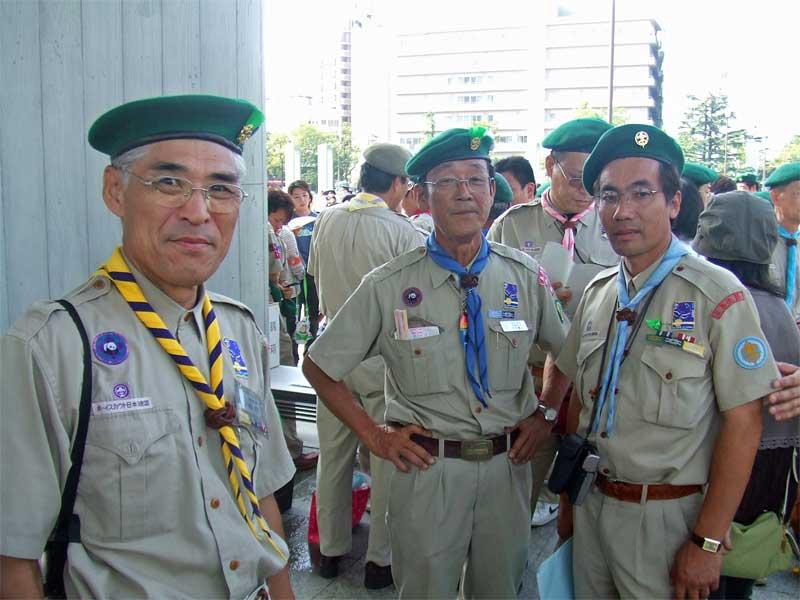
I also saw some Boy Scouts. In Japan, Scouts have been gender integrated, and now you see young boys and girls together. So Japan, in my eyes, is more advanced than the U.S. BTW, the Scout leader on the far left told me that he was going in Hawaii this fall.
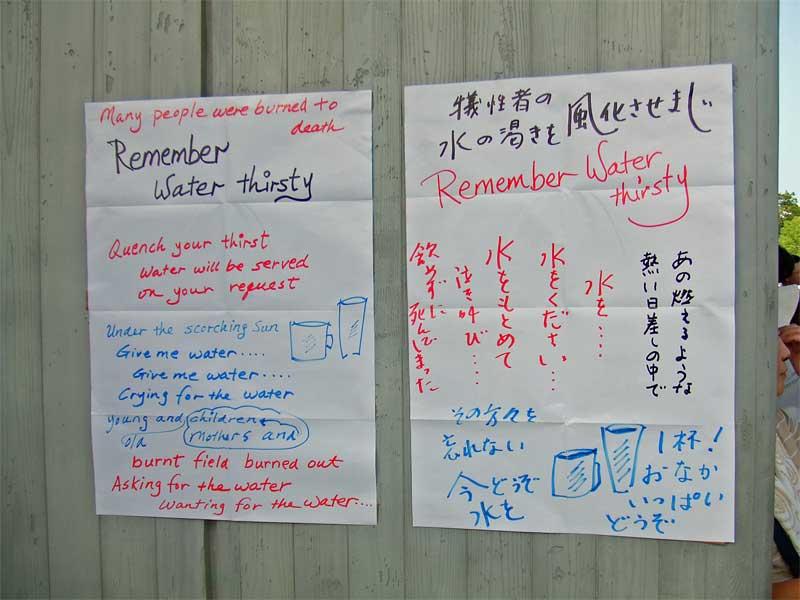
A volunteer table was handing out glasses of water, and when I drank, I saw a sign reminding me that after the bomb, badly burned victims often died in the merciless heat crying out, “Water, water…” So I felt guilty about water.
I could hear Prime Minister speaking, but not see him. Then the ceremony was over. I waited in the International Exchange Lounge (with free English books to read) for awhile, then remembered a sign telling people to come to ground zero at 10:00 am. I ran there in the sweltering heat, and saw a crowd of people staring at the sky. A helicopter was hovering at the exact spot where the bomb went off and was going to take a picture of us. Some kind of peace project. In the meantime, a boat with some musicians standing on it was just 30 meters from the A-Bomb dome in the river, and the Japanese woman was singing, “What a wonderful world” and “Imagine”.
Are western songs that popular? BTW, these two songs are available on Karaoke in Japan, and I recommend you learn them if you want to sing in English over here.
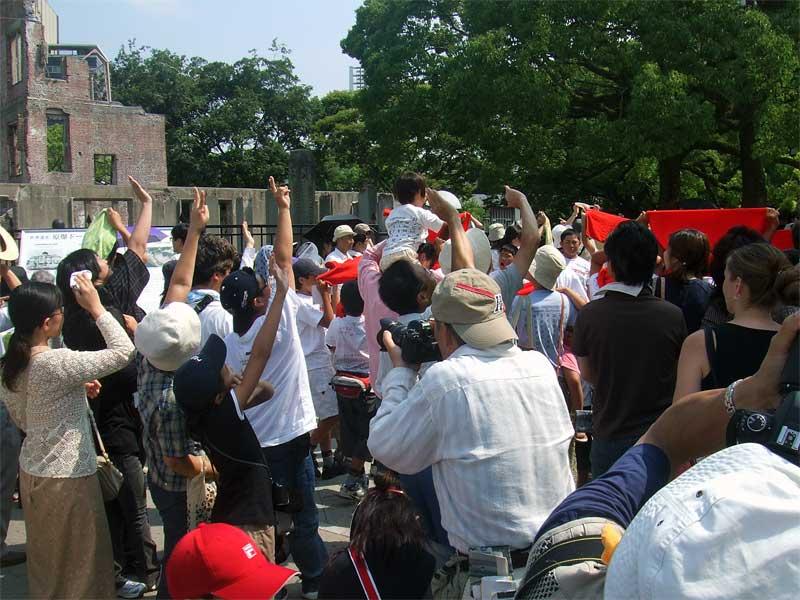
Saw a demonstration of people gathered. But no bad vibes. They were inviting foreigners to come up, for example, one would say, “I’m from Iran.” Then the emcee asked him to chant in Persian for “Peace in Iran. Peace in Iran.” Then they all did it in English. An American came up, and they stared chanting, “Peace in America. Peace in America”. Then "Peace in Korea. Peace in Korea."
Pacifism has truly spread throughout Japan. Very little anti-American sentiment, and more a forward-looking "lets have peace" sentiment. Much of the crowd was visiting all the memorials to the dead and burning incense and saying prayers.

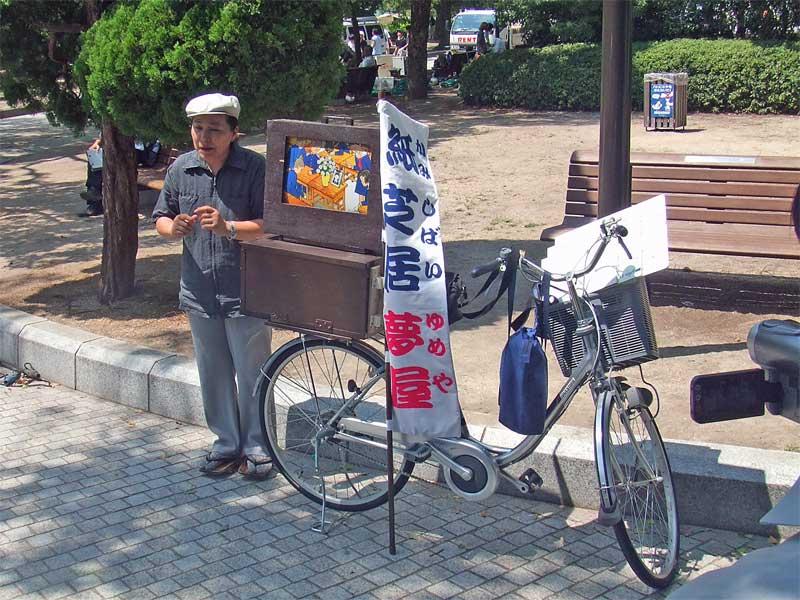
I saw a kamishibai performance. A woman arrived on a bike, and then showed illustrations on card, which she kept revealing like a slideshow. She changed her voice to play different roles, and was quite dramatic in her tellingthe story of Sadako, the girl who inspired the Children’s memorial in the Park. Some 10 meters or so away from her, another group of performers was telling the story of Sadako, this time one played on a wooden cello, and the woman just read from the Sadako book. No Role Playing whatsoever.
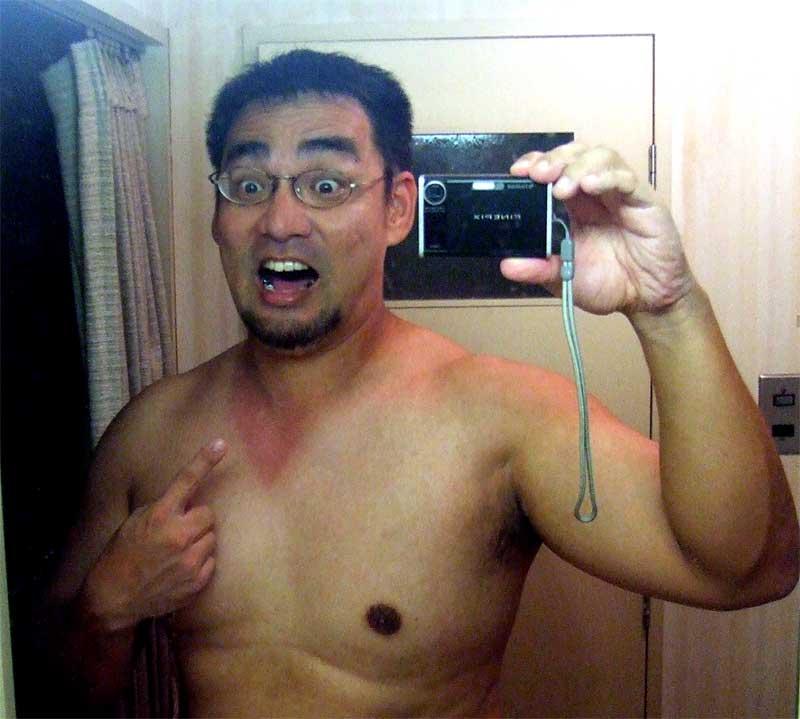
I got soaked with sweat in the unbelievable heat and so headed on back to the station to check my email, and then went off to eat dinner with the family. Then I realized I had no sunscreen, and saw I was sunburned on a little patch of skin. Ouch!